Showing posts with label Authors. Show all posts

Tuesday, December 02, 2014

Book Review: God is a Gamer by Ravi Subramanian


In yet another of the banking series, Ravi Subramanian comes up with a thriller that spans continents, governments and different companies.

The story:
The book starts with various seemingly disconnected events that happen in the same timeframe. These incidents include the assassination of a high ranking government official in the US, a Nigerian Phishing scam in the Indian branch of the New York international bank and a chance meeting of two acquaintances in a drug exchange in Goa, and an ATM heist. These incidents are preceded by a major development in the world of banks and the payment industry and the rise of the controversial virtual currency or the world of bitcoins.

The story continues with its crisp page-turning pace with the introduction of several characters at various points in the book. Starting with the US official who was murdered, his wife Nikki and daughter Gloria, Ashok, the owner of India’s largest BPO and gaming site, an Indian American who was the chief operator of the ATM heist, Ashok’s long lost son Varun who returns to turnaround his dad’s fortunes in the gaming industry, Malvika, the CEO of New York International Bank and her daughter Tanya, and some recurring characters from his previous book ‘If God was a Banker’ – Swami, a banker with the New York International Bank , and erstwhile banker Sundeep who is now Ashok’s right hand man.

What I liked about the book:
I thoroughly enjoyed the concept of the bitcoins and how they are woven into the storyline. At the end, even if all does not make sense, the means to get the bitcoins certainly does. Ravi Subramanian true to his financial industry background has done some justice to this emerging world of bitcoins.  
I found some of the final revelations on the mastermind behind it all and the motive a bit far-fetched. It was only at the end in which the by-line which accompanies the name of the book ‘Is revenge a crime’ angle is disclosed. Although I enjoyed most of the book, the end seemed to be just not right and just strange!

What I didn’t like about the book:
Well, I have mixed feelings regarding the size of the chapters and the number of characters introduced. The story flits from one context to another a little too fast and it becomes hard to keep track at times of the number of characters that continually get introduced.  However, if you do manage to remember who’s who, the end might just make some sense to you. What I also didn’t like was the unnecessary incorporation of steamy scenes which this author could have really done without. His books are really not from the genre where the author needs to titillate.

Verdict
To sum up, the story is well built, the bitcoin concept is brilliant. However even so, although all the ends are tied up, I was left with a sense of too many things being too far-fetched or unnecessary. I wouldn’t say this is Ravi Subramanian’s best book yet. However, I would still recommend this as a one time, one shot, entertaining read. All in all, I would give a rating of 3 out of 5 for the book.

Thanks Blogadda for the autographed copy of the book!

Friday, April 11, 2014

Jerome K Jerome - Humor writings

J of the A to Z Blogging Challenge


Of the many writers I have admired, Jerome K Jerome (JKJ) is one who has made me nod my head and laugh out really loudly in public places where I might be reading!  While I admit that PG Wodehouse was the king of humor writing, JKJ has also given us books that are downright crazy but utterly believable.

There are two acclaimed books which I particularly enjoyed and have read over and over again – Three Men in a Boat, and Idle Thoughts of an Idle Fellow.  While the first is a splendid travelogue on adventures of three lazy friends and their dog Montmorency who take a boating and camping trip on river Thames, the second is just a series of essays on various topics. 

A few memorable lines from Three Men in a Boat that still make me laugh –


“My tooth-brush is a thing that haunts me when I’m travelling, and makes my life a misery.  I dream that I haven’t packed it, and wake up in a cold perspiration, and get out of bed and hunt for it.  And, in the morning, I pack it before I have used it, and have to unpack again to get it, and it is always the last thing I turn out of the bag; and then I repack and forget it, and have to rush upstairs for it at the last moment and carry it to the railway station, wrapped up in my pocket-handkerchief.”

 “I like work: it fascinates me.  I can sit and look at it for hours.  I love to keep it by me: the idea of getting rid of it nearly breaks my heart.”

A few quotes however may not do justice if you get a chance to read the various anecdotes narrated in the course of the book and the journey.

The story of Uncle Podger who fixes a painting ‘single-handedly’ after enlisting the help of the whole house, finding lodging at one of the stops, opening a tin of pine-apple, cooking food are all hilarious.

A few quotes from Idle Thoughts of an Idle Fellow –

On Being in the Blues – “I can enjoy feeling melancholy, and there is a good deal of satisfaction about being thoroughly miserable; but nobody likes a fit of the blues. Nevertheless, everybody has them; notwithstanding which, nobody can tell why. There is no accounting for them. You are just as likely to have one on the day after you have come into a large fortune as on the day after you have left your new silk umbrella in the train. Its effect upon you is somewhat similar to what would probably be produced by a combined attack of toothache, indigestion, and cold in the head. You become stupid, restless, and irritable; rude to strangers and dangerous toward your friends; clumsy, maudlin, and quarrelsome; a nuisance to yourself and everybody about you.”

On Dress  - “They have a wonderful deal to do with courting, clothes have. It is half the battle. At all events, the young man thinks so, and it generally takes him a couple of hours to get himself up for the occasion. His first half-hour is occupied in trying to decide whether to wear his light suit with a cane and drab billycock, or his black tails with a chimney-pot hat and his new umbrella. He is sure to be unfortunate in either decision. If he wears his light suit and takes the stick it comes on to rain, and he reaches the house in a damp and muddy condition and spends the evening trying to hide his boots. If, on the other hand, he decides in favor of the top hat and umbrella—nobody would ever dream of going out in a top hat without an umbrella; it would be like letting baby (bless it!) toddle out without its nurse.”

On Memory – “It seems as though the brightest side of everything were also its highest and best, so that as our little lives sink back behind us into the dark sea of forgetfulness, all that which is the lightest and the most gladsome is the last to sink, and stands above the waters, long in sight, when the angry thoughts and smarting pain are buried deep below the waves and trouble us no more.”


Go ahead and enjoy his books for free from Project Gutenberg!

Thursday, January 31, 2013

Book Review - RIP by Mukul Deva


Multi-crore rupee scams and scandals have caused much havoc in India. Anti-corruption movements have gained ground in the recent past and the nation is seething with anger at the blatant misuse of their hard-earned money.  In light of the public sentiment, Mukul Deva has penned a page turning thriller which has a deceptively simple idea – death penalty for the corrupt.  This book can strike a chord with many a young Indian and I wish, really wish, strike some fear into the hearts of the wicked who rule us.

‘This book was born out of an extreme sense of anger and shame. Anger at the appalling, naked greed so shamelessly displayed by the Indian political class. And shame that they happen to be fellow-Indians.’ – Very well said Mr Deva.   Common Indians feel your anger and shame.

Plot
The K-team or the R.I.P –the Resurgent Indian Patriots is introduced in the first chapter where they are about to carry out a deadly assassination of a powerful politician embroiled in several scams.  The K-team, an outfit of a handful of handpicked men from the military forces led by Colonel Athawale, is out to send out a strong message – Stop messing around with public funds or die. Amidst tight security, they carry out the assassination, and send out their warning through media channels leading to shock waves through the country.  Not only do they do this, but also give away hints on their next strikes. With such powerful targets, it is but natural, that the K-team is the target of many. Equally wily forces are hired in addition to the official investigators and the race is on to see which force finally wins.

Alongside, some side romances, involving an obviously beautiful woman, are introduced. I thought these were completely unnecessary although the necessary links were all present. Thankfully, these did not meddle with the climax of the book.

Characters
All the characters, right from the K-team were very well etched and had the trappings of the roles they played. The other characters are mostly well known and it wasn’t hard to derive parallels from real life.
Much as Mukul Deva ‘stresses’ on the fact that the book is a work of pure fiction and resemblances are coincidental and fictitious, it is amusing to note that he must have been forced to do so to be politically correct. The names have only been twisted a teeny bit from the originals although the scams that originated from them have been almost named as they are.  For the same correctness reasons and to show that the RIP outfit is secular, the members of the team include a representation from all religions. I almost thought Amar Akbar Anthony when I saw Krishna, Kashif and Kevin in the first chapter! The politicos' hired gun, Raghav Bhagat has been well sketched as the rogue ex-para commando, a ruthless man who can go to any length for the money.

For the young audience the book targets, a romantic angle has been thrown in for good measure with the character of the pretty news anchor Reena.  Although she takes up a good chunk of the book, she is like one of those Bollywood heroines, who are nice and pretty but needn’t really have been there in the world of cold, steely men with missions!

Language
The language of the book was not exemplary, but was the typical Indian conversational English and easy to understand like most new Indian authors.  There is some use of expletives.

My view
Overall I enjoyed the book for the topic and the a-la Rang de Basanti storyline. I don’t think I would exhort this kind of justice, but like the author said, I wouldn’t shed a tear of sympathy if any of these corrupt politicians are done away with.  I would rate this book a 4/5 for the entertainment value and for the fleeting pleasure it gave me in thinking of a corruption free country.

This review is a part of the Book Reviews Program at BlogAdda.com . Participate now to get free books!


About the Author
An alumnus of La Martiniere College, Lucknow, the National Defence Academy, Pune and the Indian Military Academy, Dehradun, Mukul Deva was commissioned in December 1981 into the Sikh Light Infantry of the Indian Army. He took early retirement from the army after fifteen years of service, including a decade of combat operations in India and overseas. Now settled in Singapore, he is an entrepreneur, motivational speaker and an executive, business and creativity coach. He is also a Mentor on the United Nations Institute of Training and Research Afghanistan Fellowship. He is India’s leading writer of military thrillers, including the bestselling Lashkar series.

Saturday, January 05, 2013

Book Review - Once Upon the Tracks of Mumbai by Rishi Vohra


I don’t usually read romantic novels, but a few comments on the book intrigued me enough to read Once Upon the Tracks of Mumbai, a debut novel by Rishi Vohra. It promised to be a cross between romance and drama backed by some strong characterization. 

The Story
The story is partly narrated in the first person by the protagonist, Babloo who has ‘psychiatric problems’. The story revolves around Babloo who lives in a railway colony at Bandra with his parents and brother. He has managed to study and graduate but cannot find a job given his limitations. His parents dote on his ‘normal’ younger brother which Babloo resents. The only light he perceives in his dark life is Vandana, the ubiquitous girl next door who always has a kind word to say to him that sets his heart fluttering.

Babloo deeply in love with Vandana, takes the help of his sinister loafer friend Sikandar who is up to no good, to woo Vandana.  The story goes on about Babloo’s pining after Vandana,  Vandana’s quest for the perfect man and Babloo’s fantasy of a super hero ‘The Rail Man’.

My view
What worked -
What I liked was some of the typical things pointed out in the book around Indian families. Like the arranged marriage scenarios, compromising attitude of the girl’s parents, the importance given to the son who earned as compared to the one who did not, and a girl’s basic expectations of her life partner. 

Characterization -
Vandana’s character is well etched out as the typical ambitious middle-class Mumbai girl with strong values and expectations of a decent guy to marry who will care for her. I also liked the character of the kind taxi driver who saves the day once and that of Sikandar, Babloo’s wicked friend.  However, The author didn’t seem to make up his mind if to make Babloo autistic, schizophrenic or psychotic. So he labeled him as all three, despite the fact that Babloo could do pretty much everything! I am sure it is difficult to get into the mind of someone who is mentally challenged, and I am not sure if the author scored really well on this count.  

Narration –
The book started off with a first person narration which seemed to work well, but later wavered between third person and the first person which I found a bit distracting. The language was lucid and descriptions were vivid. The pace was good and kept me hooked to finish the book in one sitting.

Overall
The story was not bad at all as compared to many Indian authors I have recently read – it had all the elements required in a Bollywood potboiler which I strongly suspect was the main reason behind writing this book! There was romance, drama, action, and some good characters audiences might like, but what is required importantly was a strong reality check!  I didn't really concur with the end, which seemed highly unrealistic to me, but well, it was expected right at the beginning of the book! All in all, this book provided a few hours of entertainment and will certainly make a worthy film not unlike My name is Khan.

My rating for the book is 3 stars out of 5.

About the Author
Rishi Vohra recently relocated back to Mumbai after completing a Green MBA from San Francisco State University and a Masters Diploma in Environmental Law, prior to which he had a successful career in the Indian entertainment industry. Having been a guest columnist for various newspapers in India, he currently writes for delWine and is a Certified Specialist of Wine. This is his first novel. Visit www.rishivohra.com for more information.


Sunday, October 07, 2012

A juicy detective fiction mystery anyone?

There are thieves and murderers and then there are the police to catch them. And then there are private detectives. And there is detective fiction. Books from this genre have been on the best-selling charts, second to only perhaps romance, for decades and the trend seems unlikely to change. I find no greater pleasure than sinking my teeth into a nice unputdownable ‘juicy’ mystery with plenty of suspense on a lazy afternoon.

Types –
There are two types of mystery writings that are usually used in detective fiction –

1. Whodunit – This genre of writing has spawned thousands of books and mysteries. The first instance of a great mystery novel in the western world is considered to be The Moonstone by Charles Dicken’s protégé Wilkie Collins written in 1868. The Moonstone which contains most of the ideas in the present day Whodunit is considered to be the pioneer of these ideas. Some characteristics are –
  • A crime (mostly murder) is committed
  • The police usually are a bumbling force who usually jump to hasty conclusions. 
  • A celebrated detective is consulted
  • The job is always an inside job
  • A large number of suspects are presented with varying motives
  • The scene of crime is usually one that is accessed by all the suspects or is a locked room from outside.
  • There always is a twist in the tale
  • The detective chides himself midway in the book before something unexpected that his sidekick says puts him on the right track
  • The murderer is usually the least likely suspect although the solution makes him the most plausible!
  • The mystery keeps you turning pages till you find the solution at the end!
2. The inverted detective story - The second kind of novel is one in which the perpetrator of the crime is known. In this kind of story, the reader finds clues that will unravel how the perpetrator did what he did and get a plausible solution. I recently read an example of this in a book I recently reviewed –‘The Devotion of Suspect X’

Characters

The local Police - The police usually are a bumbling force who usually jump to hasty conclusions.  From the puffed up but foolish Mr Goon in Enid Blyton’s Five-find outers to Inspector Lestrade in Sherlock Holmes, the police usually always end up catching the wrong guy with much confidence. 

The side kick- The detectives in the fictional world are usually a superior species, usually accompanied by a loyal but not as bright sidekick. . An important role that the sidekick plays is that of the narrator of many of the stories.  The sidekick usually helps them think or saves them in the nick of time in times of distress. The sidekick also engages in frivolous talk and activities such as falling in love. From the famous Mr Watson, the roommate of Sherlock Holmes, Captain Hastings of Hercule Poirot to Bess Marvin, who was Nancy Drew’s best friend, they usually have similar characteristics.

Suspects – A motley of characters is thrown in. There usually is a romantic angle also put in. The suspects either hate the murdered person enough to be a suspect, stand to inherit something or have a long standing grudge that nobody else is aware of. 

The Detective – This character is painted differently by different authors. They are typically unmarried, celebrated and are professional or amateur.

Private investigators Their methods could vary vastly between using the 'little grey cells' (Poirot) or the 'science of deduction' through powerful observation (Holmes)  My favorites are the most popular private investigators of all times- Agatha Christie’s- Hercule Poirot, and Conan Doyle’s -Sherlock Holmes.  Other private investigators include Auguste Dupin by Edgar Allen Poe, Philip Marlowe by Raymond Chandler. Marlowe was the inspiration for characters in several radio and tv shows. A sub-genre of private investigation was based on court room dramas of which an attorney Perry Mason created by Erle Stanley Gardner solved cases based on investigation of hired sleuths. John Grisham, an author on similar lines, continues to dish out crime and court room dramas.

To elucidate on my favorite two –
Hercule Poirot –Hastings describes all the typical Poirot qualities and methods in the The Murder on the Links as – ‘An extraordinary little man! Height five feet four inches, egg-shaped head carried a little to one side, eyes that shone green when he was excited, stiff military moustache, air of dignity immense! He was neat and dandified in appearance. For neatness of any kind he had an absolute passion. To see an ornament set crookedly, or a speck of dust, or a slight disarray in one’s attire, was torture to the little man until he could ease his feelings by remedying the matter. ‘Order’ and ‘Method’ were his gods. He had a certain disdain for tangible evidence, such as footprints and cigarette ash, and would maintain that taken by themselves, they would never enable a detective to solve a problem Then he would tap his egg-shaped head with absurd complacency, and remark with great satisfaction:
‘The true work, it is done from within. The little grey cells – remember always the little grey cells, mon ami’.

Sherlock Holmes – Holmes strikes an opposing countenance to the dandy Poirot and differs in his methods.  Sherlock Holmes has the best observation powers in the world and ‘the science of deduction’ is his specialty. Clues such as footprints, tobacco ash and cigarette butts combined with his vast knowledge have enabled him to crack many a case. In ‘A Study in Scarlet’ Watson describes Holmes as - Holmes was over six feet and very lean. His ‘hawk-like nose gave his whole expression an air of alertness and decision.’ Watson also hints of a narcotic addiction in several books.

Amateur detective fiction is another genre of detective fiction. Agatha Christie, the queen of mysteries wrote several enjoyable books on the amateur detectives Miss Marple, the frail old lady with a razor sharp intellect and the feisty couple Tommy and Tuppence. Nancy Drew, the Hardy Boys and the Three Investigators caught the attention of teenagers as amateur detectives.  As a kid, I immensely enjoyed all the amateur detective fiction penned by Enid Blyton – Fatty from the Five Findouters was my favorite of the lot back then.  However I hugely also enjoyed other mystery series by Enid Blyton including the Famous Five, Secret Seven, Snubby-Loony series and the young adventurers.

In comics, TinTin by Herge is the most popular mystery and investigation series in which TinTin is the investigative journalist with sidekicks, his dog Snowy and the alcoholic Captain Haddock. Carland Cross was another popular British investigator in comics.

Television - Detective fiction has trickled down to the television world for a long time. Some popular non-police investigators I particularly enjoy are Patrick Jane, the ‘consultant’ of the California bureau of investigation (CBI) of the Mentalist and Castle, the detective fiction writer who investigates with Kate Beckett. The latest Sherlock Holmes BBC series that features a modern day Holmes using the latest technology gadgets such as smart phones while still applying ‘the Science of Deduction’ is very interesting too.  As a kid, I enjoyed Remington Steele and Laura Holt although I don’t remember much of it now!

Writers
Wikipedia says the Golden age of detective novels was in 1920s and 30s when several popular writers emerged, the most famous being Agatha Christie. Four female writers of the Golden Age are considered the four original "Queens of Crime"- Agatha Christie, Dorothy L. Sayers, Ngaio Marsh and Margery Allingham.  All except Ngaio Marsh who is a New Zealander are British.  Other British writers include Anthony Berkeley, Austin Freeman, Michael Innes and Philip MacDonald.  More known for the British writing, this period also had the Georges Simenon  who wrote in French and the American John Dickenson Ellery Queen and SS Van Dine. For an exhaustive list of writers refer to http://www.gutenberg.org/wiki/Detective_Fiction_(Bookshelf)

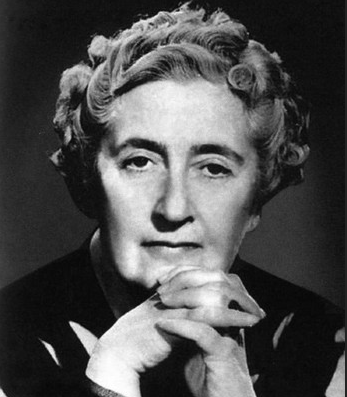
Agatha Christie
Writing a detective novel, is still big business and almost every weekly best seller list I see contains a mystery novel.  It is interesting to note that Mystery writing in English has also evolved in India over time. Byomkesh Bakshi, a Bengali detective was one of the popular detectives created in the 1930s. After several crime writers in regional languages, in English there are more Indian writers turning towards this genre and steering away from the chick-lit novels.  Amitav Ghosh’s  The Calcutta Chromosome and Vikram Chandra’s Sacred Games are significant leaps forward in the area of serious mystery literature.  I find it immensely hard to turn away from the genius of Christie or Doyle, but would welcome more such page turners in the Indian literary scene. 

I am walking off to sink my teeth into that nice juicy mystery novel! What mystery book do you want to pick up to read next?

Sunday, September 23, 2012

Book Review - The Krishna Key by Ashwin Sanghi


Five Thousand Years ago and Today. Ashwin Sanghi in his characteristic style weaves a story that blends mythology, fact and fiction. A huge amount of research is sprinkled liberally in the whole novel that adds to the story and sometimes confounds the reader.  After a chartbuster Chanakya’s Chant, Ashwin Sanghi writes on similar lines juxtaposing two parallel stories of a long bygone past of thousands of years ago and the present day.

The Story (or Stories I should say)
Two stories are included in this novel – The first one is the familiar story of Krishna as narrated by Krishna Himself. This story precedes the present day story in every chapter. The second story is set in the present day and revolves around a thrilling mystery unraveled by professor and historian Ravi Mohan Saini around the ‘Krishna Key’.

The second story that is new to us starts with a ruthless assassin murdering a scientist Varshney who was at that very moment engaged in deciphering a cryptic ancient seal with three ancient animal motifs.  Varshney’s old friend Saini unfortunately visits him before his murder and is accused of his murder. The story zips along with Saini fleeing from the police with his trusted accomplice and student, Priya in tow.

Saini discovers that the killer is after the four seals that Varshney had been killed for. Fortunately, three of the seals were entrusted to him and two others scientists. These four formed a set of four or the ‘Krishna Key’ that could lead to a priceless legacy left by Krishna.

The reader gets introduced to the killer who is a protégé of a mysterious ‘Mataji’. The killer has grown up believing himself to be Vishnu’s tenth avatar, the Kalki Avatar but commits the crimes unflinchingly as instructed by his ‘Mataji’. The competent police office Radhika Singh and her subordinate Rathore are hot on Saini’s trail as he tries to decipher the cryptic clues, prevent more murders from happening and identify Varshney’s killer.

The story flits across diverse locations of the desert in Kalibangan, under sea ruins of Dwarka, the icy peaks of the Himalayas, the milky white Taj Mahal and the lingam of Somnath. A trailer that is released on YouTube also highlights these locations.

My opinion
I enjoyed the book for the fast paced story and many of the facts drawn from Sanghi’s research.  His research explained that the mythical river Sarswati might have watered the Indus Valley Civilization, and that the Mahabharata really did happen. It was also revealed that the ancient city of Dwarka may have been built on reclaimed land and is now submerged under water.
  
However, the large amount of research that was presented in this book was its biggest failing. I grant that the author has been thorough in his research BUT, way too much of the research has been dumped on the unsuspecting reader.  It is almost as though he wanted to tell us everything that he had researched whether or not it had too much bearing to the story.  Some crisp editing might indeed have helped.

The other grouse I have is that I could not follow right to the end the supposed parallel between the two story lines. Unlike his previous work Chanakya’s Chant where the old and the new stories comingle with ease, I had to re-read the two stories but could still not make out the parallel tracks for many. If Sanghi wanted to narrate the story of Krishna, he might as well have written a separate book on it.  

Many had already called Ashwin Sanghi the Indian Dan Brown in this book, a comparison I tried hard to ignore. By and by, unfortunately, the similarities grew and the feeling of inspiration from the Da Vinci Code was unshakeable.  Although, as a Hindu mythology buff, reading a story in a more familiar context was enjoyable nevertheless.

My Verdict
With its fast pace, diverse locations, and ample thriller elements, this book is definitely written as a script for a movie. I would give it a 3.5 stars on 5. Read it, but be prepared to be confounded by a sea of research that might send you scurrying to Google to verify facts!

To check out the you-tube trailer of the book see - http://www.youtube.com/watch?v=Yyiz7okQx8I


This review is a part of the Book Reviews Program at BlogAdda.com. Participate now to get free books!

Monday, April 23, 2012

Book Review: The Lost Story by Amit Goyal and Sudhanshu Gupta


When I received this book from a budding Indian author, another MBA at that, I was skeptical and had almost labeled it a la Chetan Bhagatesque book packaged differently. However, I was in for a pleasant surprise when I found this collection of short stories bound in a longer story quite well written, entertaining and with a great recall value.

The Plot
The story begins as a budding author Sandy gets an offer from his favorite and revered booker-winning author Saleem to write a short-story book with him. One starts the story and the other finishes it in his own distinctive style. Likewise, two separate people have written the book.  As the stories unfold, Sandy tries to understand Saleem’s past and the secret behind a locked room in his house.

The Stories
The stories were an eclectic mix of a sinister ghost story, a gay super hero to an office romance. I particularly liked the story of the ill omened brothers named as Rahu and Ketu, the ordinary guy who did not fight the terrorist but had to live up to being a hero and the touching story of the Old Man who everyone ignored in the cafe. The book could probably have done without the romantic stories which did sound, forgive the term, more MBAesque and less Booker-writeresque as had been delineated. The end of the book was rather esoteric and I had to reread it to truly understand what the author wanted to convey. But then again, the end fitted well into the scheme of things.

Writing Style
Considering the fact that two different authors had written each of the stories, I was not really able to distinguish two separate styles, which would have been a major concern in maintaining the continuity in the book. The language used was descriptive, and visually stimulating. Fortunately, the parlance did not venture into the territory of mixing in Hindi as is the current trend or and the use of invectives was controlled much to my relief.

The Verdict
I will go with 4 stars for this book for originality and interesting stories. 

Wednesday, September 28, 2011

The Secret of the Nagas by Amish Tripathi – Book Review


This review of the second part of the Shiva trilogy follows my earlier blog where I have reviewed the first part 'The Immortals of Meluha'.


The second part 'The Secret of the Nagas' picked up where the author had left off with a skillful Naga targeting Shiva’s consort Sati after the attack of Mount Mandar and killing his friend Brahaspati. Shiva vows to hunt down the Nagas to avenge Brahaspati.  Along this quest, he searches for answers to understand what evil is and if the Nagas can lead him to this secret.  As promised by the very attractive book cover and the blurbs from other reviewers published on the book, this second part of the trilogy is action packed.  Perhaps a little too action packed.  Shiva battles the Nagas, the Nagas battle with others. There are also fights with the Brangas who support the Nagas. A mission to combat ‘bandit’ Parsuram is led by Shiva while Sati duels with tigers. A second love story apart from that of Shiva and Sati is also thrown in. Kartik is born to Shiva and Sati and long lost siblings are re-united in this second book. With so much happening, I honestly felt like I was watching a hindi television serial that had twists and turns and ample ‘dramebaazi’ on every page of the book. However, what irked me the most was the revelation of the secret of the Nagas, their identity and their delineation. The pleasure I had felt in reading familiar names in a fresh light evaporated when justice was not done to these very revered and familiar names. 

 For those who like racy books, possibly this book might be a treat. I have to admit, I was hooked to the book, but it gave me the impression, that the author had almost thrown away the opportunity of writing a classic thriller by merely being crisp in his writing.  I was hoping, the author would lend a little more color to Shiva’s character apart from his blue throat in this volume, but alas!, Shiva remained very one dimensional, almost to the point where, he became just a figure head for the legend that He was out to destroy Evil in the world.

On the positive side, this book is certainly very vivid in its descriptions and would make an eminently watchable movie.   The intense action in every battle and the internal turmoil that Shiva was undergoing has been expressed well. I could almost hear the drums in the war and see the blood shed. Shiva’s discovery of the deep underlying message that Evil is a matter of perspective was well narrated, and I could almost see him in the ancient temples and hear his conversations with the Vasudev Pandits who helped him in this discovery.

I would give this book a three star rating out of five for its racy plot and innovative story.  A crisper story, a different choice of words to replace commonly used Indian phrases such as ‘what rubbish’, better characterization and good editing will probably elevate this book to a much higher level. I do hope that while the author tones down what is not necessary, the high energy levels that are in the first two books continue in the third and final book of the trilogy, 'The Oath of the Vayuputras’. I look forwad to reading the final version and hope for a spectacular finish!

Read more on the triology on http://shivatrilogy.com/index3.html

This review is a part of the Book Reviews Program at BlogAdda.com. Participate now to get free books!


Sunday, September 25, 2011

The Immortals of Meluha by Amish Tripathi - Book Review


I was excited about reading the first book of the Shiva Trilogy by Amish Tripathi and was thrilled when Blogadda gifted me a set of the first two books in exchange for just an impartial review for readers and the author.  It certainly was a win-win situation!

‘The Immortals of Meluha’, the first in a series of three is a fresh perspective of what Hindus and Indians believe in or know as mythology.  The author in his book has personified what Hindus have deified.  Shiva as we know him, has been portrayed as a mere mortal, albeit a great mortal and warrior. Reading this book with familiar landscapes and characters but a new story was an odd but interesting blend of knowing and not knowing what would come next. Familiar characters of Sati, Daksha, Nandi, Veerbhadra, Brihaspati have been personified in roles, as we know in mythology and I could easily conjure up images from the Amar Chitra Kathas that I had read in the past. I loved the canvas that had been painted for the entire storyline using various ancient civilizations of the Indus Valley of Mohenjo Daro and Harappa as well as from ancient Hindu cities of Ayodhya, Takshashila etc.  

The plot revolves around Shiva aka the Neelkanth, Mahadev or Natraj, who is a young warrior and leader of a tribe in Mount Kailash. He moves with his clan in a search for peace, to Meluha, a land famed for its ideal civilization more popularly called Ram Rajya. However all is not well in Meluha, this land of the Suryavanshis.  The Chandravanshis, their foes who reside in Swadeep seem to have allied with the evil Naga race and engage in terrorist attacks causing havoc in Meluha.  The story chronicles Shiva’s journey of love, thirst for revenge, and his quest to find evil to root it out.  Aided by the dependable Parvateshwar, with the fearless Sati on his side and the Vasudev Pandits guiding him in his spiritual quest, Shiva leads fearsome battles against his foes and leaves the readers asking for more.

The flow of the story was smooth and the narration gripping, although somewhere I felt the author drifted off at times losing focus of the main storyline and the characters.  Although the characters were strong in themselves, there was plenty of scope of adding more depth to their personalities through their actions- especially Shiva’s.  What I particularly did not like, was the use of modern day Indian parlance consisting of phrases such as ‘what the hell is happening’, ‘Dammit’, ‘what nonsense’ etc. a tad too many times taking away that old world charm in which the story was set. The landscape Amish has chosen to paint his story in, is marvelous, and I do think there is still plenty of more room to use this multi-region, multi-cultural background to his advantage to create a masterpiece.

All in all, The Immortals of Meluha was a gripping story that would probably make a riveting movie. I enjoyed reading it and I look forward to getting to Secret of the Nagas – the second volume of this trilogy! 

Read more on the triology on http://shivatrilogy.com/index3.html

This review is a part of the Book Reviews Program at BlogAdda.com. Participate now to get free books!

Friday, February 18, 2011

Book Review: The Hunger Games by Suzanne Collins


When I started reading this first book of a triology, I was entranced by the very strange storyline. It started normally enough with the protagonist Katniss Everdeen, a teenage girl giving the description of the aftermath of an apocalypse and the remains that became Panem ruled by the Capitol.  Panem was divided into 13 districts, one of which was razed because of a rebellion, and then, as punishment, here comes the interesting part- ‘The Hunger Games’ were organized.   These games were no ordinary games, not dissimilar to a regular reality survival show we see on TV, but dissimilar in the fact that, to win these games, participants had to survive from other participants, which meant, they had to kill all the others. As punishment for the rebellion, these participants were kids or ‘tributes’ from the twelve districts chosen by lottery. Katniss Everdeen, the protagonist was chosen along with Peeta to be a part of the Hunger Games.  The prize for the victor was a continuous food supply to their district and a lifelong of comfort for them.  The book goes on to describe the violence and blood thirst as well as compassion that goes on in the arena as the reader begs to stop it all, at the same time being riveted to it.  Chilling concept isn’t it? A story which makes adults want to shield their kids from this very stuff, but can’t,  given today’s violent day and age. Watch kids play a video game, and see how they don’t bat an eyelid as they blow up hundreds , hundreds of times!


The second and the third part of this triology, ‘Catching Fire’ and ‘Mockingjay’ continue with the second Hunger games and with organized rebellions and revolutions against the Capitol buoyed by the symbol, surviving Katniss Everdeen.  I guess, the first two books did grab my attention because of the novel concept even though I hate even watching less brutal reality shows. I got wearied by the time I reached the third part and I wondered, did I really like the first two parts?  Kids killing kids! Really?! Even if they felt remorse or spent sleepless nights after that,still! Too bloody.  All the same, Suzanne Collins has been able to keep the reader hooked to her books.  Though I hate to admit it, her books were rather entertaining  if I actually stopped thinking it could be for real!

Wednesday, January 12, 2011

Krazy about the Kindle

As this is my first blog of the new year and decade, I wish you, my dear reader, a very Happy and a Wonderful New Year!
 

I remember a class in school once in which we envisaged a future world in 3000AD that would have kids having no more books and them scribbling on tablet like computer devices. Well, with the advent of the e-reader and tablet devices, I believe, we are slowly getting there. Imagine, kids not having to carry those heavy satchels that we once did. One device would do it all.

eBooks started way back in 1970 with the advent of Project Gutenberg that still works to digitalize and preserve books. From a limited selection formerly available to a limited audience, eBooks have come a long way in threatening the paper and pulp books. Amazon can be credited with developing the first hardware to read e-books, the e-reader. The Amazon Kindle is a product that I cannot help eulogizing over and over again to anyone who will or will not listen.

At a tiny 8” x 5.3” and as slim as a 100 page notebook, the Amazon Kindle has a capacity to carry 3,500 books, if one can read that many in a lifetime! It is a miraculous device with benefits that totally outweigh real books. Reading tomes such as Tolstoy or Tolkien feels much lighter than it actually is! I can read in the flight, in the train, on the beach, in the park, in the gym and what’s more, I never fall short of choice as I can carry my own personal library wherever I go! If I want more, I can simply browse to the Amazon store and buy books wherever I am to be delivered within seconds! If I am driving, and can’t read, I can make it read aloud to me. I can increase the font while in the gym and make it autoscroll. The embedded dictionary as a super fast reference certainly helps my vocabulary. The Kindle apps in various other devices, help me flip between devices as well. I can highlight, book mark pages,  share them over facebook and twitter, make notes and read more than I ever did!  What more could a book lover really want? Unlike backlit devices such as the Ipad and other tablets, this magic tablet doesn’t even strain my eyes anywhere, and it beats me, why one would read in the dark anyway!


I can almost now imagine an exam question now. Cite the differences between an ebook Reader and a real book in a history lesson in the near future! Well, the pros I have stated above. The only thing I do like in books not available in the Kindle , is…is… well there is nothing I can think of now!


Those individuals, who smell the paper in old books, love the sound of turning pages, enjoy delicately handling crumbling paper, cringe about e-ink and decry the new eReaders and eBooks should just have a reality check and check foolish sentimentality. It wouldn’t hurt to think of all the paper and trees that will get saved as more and more books go the e-way. eBooks and eReaders are here to not just stay, but to take on the real books. Maybe I should just start collecting hard copies of books now. They probably will be very rare a few years down the line and might sell for a fortune!


Cheers to the New Year and  Happy Reading!

Thursday, May 13, 2010

Champaks and Tinkles and more...


Continuing the ACK Blog that I wrote last, there was a wide world for us young readers back then. Champak was looked forward to every fortnight when the postman used to drop it in. Champak, you might remember, was that small sized colorfully illustrated magazine full of life, of animals who dwelt in Champakvan and Nandanvan apart from other children stories and a few comic strips in it of Cheeku the wonder rabbit and others. Then there was Tinkle too, which was loved by all. Initially I used to get the larger sized Tinkles, then I remember getting the smaller sized fatter versions of it in the form of Tinkle digest. Fond readers might remember Shikari Shambhu and who can forget Suppandi and his goofiness.


There was a phase when I also read up Chacha Chaudhari with his red turban and stick and Sabu who hailed from Planet Jupiter. These were of course our own home bred super heroes who saved the world! And who can forget, whenever Sabu gets angry, volcanoes erupt!

I’ m not sure if a lot of people read Chandamamas, but they were one of my favorites too. I had amassed quite a collection of Chandamamas right from the 60s from various ‘raddi’ and scrap stores! They used to have several amazing folktales from all over the world and different parts of India. There used to be an engrossing serial story too in each volume and typically continued for the year. And it was from Chandamama that I learnt about Vikram the king and Betal the ghoul who put up an ethical or moral question after a story recited to King Vikramaditya in an eerie cremation ground with strong gusts of wind and terrifying voices around. Unfortunately with the technology boom and changing times, I am not too sure how well it has adapted though I hear they are out with a revamped look but I didn’t really see it in the regular book stores.

The American world of Archie also had us hooked and his perpetual dilemma back then over Betty and Veronica kept us commiserating with Betty and bitching about Veronica! Now I believe, Archie proposed to Veronica. That was big news a couple of years back! Besides the American teens, the Gauls Asterix and Obelix who entertained then, well, still have me in splits over their banter and the magic potion by Getafix is still quite potent! Tintin and his dog too led me through several adventures along with Captain Haddock (I still remember his characteristic ‘Blistering Barnacles’! though I haven’t read it for long now), and the forever bungling up twin detectives Thompson and Thompson.


Besides the comics ofcourse, there was a world of Enid Blytons to plunge into. Magic, adventure, mysteries, school stories, simple stories, the lady had it all! I guess, giving me an Enid Blyton was my Moms way of getting me out of the way! She did try some of the childrens classics too such as Tom Sawyer etc, but I guess, I stuck to the Enid Blytons!

Then as we grew up we graduated to the teen detectives in Nancy Drews, Hardy Boys, Alfred Hitchcock and baffling mysteries of Agatha Christies. I guess, that was the last of my childhood reading and then suddenly I just wanted to read other books!

I certainly am thankful that these delightful books were a part of my childhood and they certainly inculcated the habit of reading in me!

What do you remember of your reading as kids?

Amar Chitra Katha


Mythology is the study of the myths or folklore of ages gone by and been a part of the human life since the most ancient of civilizations.  I have been fascinated by the subject, especially Hindu Mythology since Anant Pai started his comic series Amar Chitra Katha.  The vivid imagery and the gripping storylines about my favorite characters suddenly stopped making Religion a bore.  The innumerable Hindu Gods and Goddesses suddenly had a story behind each of them rather than my just recollecting what each stood for. I understood the trinity of Brahma the creator, Vishnu the preserver and Shiva the destroyer when the other Gods went to them each time when they were in trouble.  I could feel my spine tingle when I saw Maa Kali in her terrifying form with her long black hair, the garland of skulls and large eyes and blood red tongue and saw why the rakshasas had run amuck on her arrival.   My personal favorite has always been Indra and Vritra with the front cover of an image of a towering Vritra and a charging Indra with his thunderbolt embedded in my memory for good.

No TV serial made the stories of Ganesha, Lakshmi, Parvati, Indra, Dashavatar, the Mahabharata, the Ramayana, the Goddesses come more alive than when I saw the sketches in ACK.  The later series of historical figures, our independence struggle leaders, the volumes on other religions such as Jesus Christ, Zarathushtra, Guru Tegh Bahadur added to my repertoire of wonderful tales and even History ceased to be boring.   

When people talk about making education interesting and interactive, I always find myself wondering as to why they simply don't convert all the history books and Geography books to comics!  I am sure that would gainfully employ lots of talented artists as well as make life much more fun for students apart from them remembering it better thanks to the visual aspect.

Ofcourse, ACK though had steered clear of most censures, the depiction of the evil Asuras as black skinned and the devas as fair skinned has always been controversial.  The violence depicted in several of the battlefields has also been subject to criticism and much has been said about how much blood should be shown to children.  Well, I ll say, in these terrorizing times of lurking terrorists, its better that they are aware of the bloodshed that exists in the world and the grief it causes. 


I am still a big fan of ACK, but now I do wish they came out with newer titles instead of basking in the glory of the ones I read as a kid.  I would certainly love to read about modern day heroes in an easier way than read their fat expensive biographies and also read about other cultures’ mythological characters such as the Egyptian and Greek.  Do tell me what was your favorite and what would you like to read in ACK?