Showing posts with label books. Show all posts

Wednesday, February 24, 2016

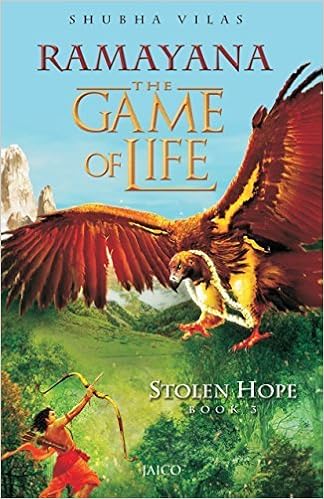
Book Review - Stolen Hope - Ramayana -The Game of Life


Ramayana – Stolen Hope is a third in the series of books named The Game of Life written by spiritual leader Shubha Vilas. Like the previous two books, this book makes for very easy reading. One can read the book just for the story or get a lot more from it with the notes on each of the stories and how we can apply them during our daily lives. While there are interpretations of the Ramayana, this series covers in parts, both the Valmiki Ramayana and the Kamban Ramayana which makes for an interesting juxtaposition.

The story - 

Most of us do know the story of the Ramayana, so I won't really elaborate on it in this blog but here is a gist of what is to be expected in this book.


The story takes off from its previous version ‘Shattered Dreams’ where Ram, Sita and Lakshmana continue their exile journey into the vile Dandakaranya forest. The story delves into their adventures with the various ‘Rakshasas’ (Demons), their meetings with various sages and people during the journey– my favorite was the story of Agastya and Shabari who they meet towards the end of the book and most importantly the abduction of Sita.

The turning point in the story as we all know is when Surpanakha, the demoness sister of the King of Lanka Ravana, sets her eyes on Rama and wants him for her own. As Lakshmana proceeds to mutilate her, off she goes to her powerful brother Ravana vowing revenge. Ravana proceeds to kidnap the Sita using guile and Ram is left disconsolate.

What I liked

The human laments of Ram who has just lost his love, of Sita who regrets her desire for the deer and Lakshmana’s emotions after Sita gets abducted make for some interesting reading. Relationships – be it between the husband and the wife, brothers, teacher-disciple, father and son, and our own relationship with God, have been well explored in the book and can help us apply these in real life.  

What I also enjoyed are discovering some new stories that I was not aware of earlier. The story of Agastya Muni, some dark tales of Ravana, the story behind the forest of Dandakarnya and the eighteen curses on Ravana kept me riveted.

While the story is a light read, since most of us are pretty familiar with the story of the Ramayana, reading through the notes and absorbing the philosophies behind the story, may not be that easy even as the author has provided examples and analogies for easy understanding. But worth it!

What could be better -
While the writing is fairly lucid, it is a little too elementary for me. While I do like to read stories for the love of the stories, the love of the language makes me long for books that have good vocabulary, and are better written. 

Verdict

That being said, I will still look forward to reading the next in the series where one of my favorite characters Hanuman makes his appearance. Overall, I will give a 3.5 on 5 stars for this book.

You can buy the book at key stores or online at Amazon and others. 

Thursday, December 24, 2015

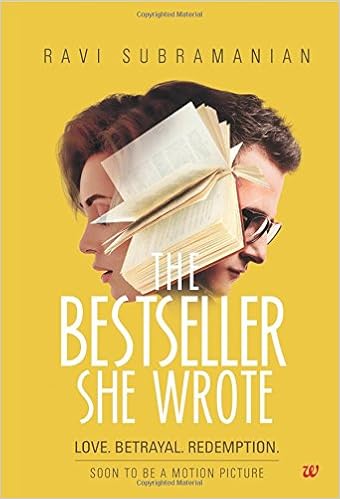
Book Review: Bestseller she wrote by Ravi Subramanian


I have read several of Ravi Subramanian’s books. Having worked in the financial services industry for about two decades, he boasts of a series of thrillers all set in the backdrop of a bank. The formula has certainly worked so far with a fast paced storyline and surprising twists for many of his earlier stories. But this book had me flummoxed. While I was set to delve into another conspiracy hatched and shady finance deals, I found a story about a squeamish and sordid extra-marital affair that was as interesting as shopping for a bag of potatoes.  

The story: Aditya is the hot-shot middle-aged successful banker and master storyteller who has never read books apart from his own.  Shreya is a student finishing her studies at B-school (obviously an IIM. Bangalore in this case) where Aditya is an alumnus. And stating the obvious – Shreya is gorgeous, ambitious, and talented. Most importantly, she wants to be a best selling author. Shreya adores the author in Aditya and looks up to him to achieve her means to be a best selling author – by hook or by crook. Aditya is good looking, successful and a very attractive ‘older man’ and yes..Married to the perfect woman. Interspersed are various other characters in the book such as Shreya’s friend and confidante, Sunaina, Ashok’s friend and batchmate Sanjay and others. More than any other plot, the story revolves around how Aditya and Shreya have an affair and the outcomes of the affair.

Well, the back page of the paperback did say this –
“What happens when their world’s collide? Is it possible to love two people at the same time? Can real ambition come in the way of blind passion? Can trust once broken, be regained?
Ravi Subramanian delves into the glitzy world of bestsellers and uncovers a risky dalliance between a superstar novelist and his alluring protégé.”

I guess, I shouldn’t have expected anything different really – no shady finance deals in this book! The entire story is summarized in those two lines and is easy to fathom!

What may work for some: If you are a reader looking for some dramebaazi Bollywood style, maybe this is a book you will like. If you like random twists in the tale that seem pretty senseless, perhaps you may find this book interesting. And well, this book is purported to become a motion-picture soon. So if you like to read the book before you watch the movie, maybe you will want to read this.

What did not work for me - was just the fact that the book had nothing new to offer and was quite insipid. Perhaps the author has become too repetitive in his rendition of the MBA story – finishing B-school, the first job, the ambition during the first job etc. Maybe it was time that he moved away from what he is comfortable with - the 2 Bs of Banking and B-school to something different. Something that was a little more intense than a lazy spin of a story woven umpteen times already.

All in all, I was disappointed in this book especially since I did get some good thrills from his previous books. I will give this book 2 stars out of 5.

I am reviewing ‘The Bestseller She Wrote’ by Ravi Subramanian as a part of the biggest Book Review Program for Indian Bloggers. Participate now to get free books!

Monday, September 07, 2015

Book Review: Mrs Funnybones by Twinkle Khanna


Celebrities are shallow, dumb, rich and have everything on a platter. The Twinkle Khanna that we knew was everything that most celebrities are – a star kid, married a star husband, starred in a movie called Mela after which better sense prevailed and retired from Bollywood and took to making what we all thought is something those rich people do – Make Candles or/and get into interior designing. 

But then, when we thought perhaps we will hear of her making a comeback as a Mom to the younger stars, she decided to don the writer’s hat in a new avatar called Mrs Funnybones instead. When I read her column first, the only thought I had was – Ghostwriter! There is no way someone who is a star kid, star wife, an ex-bollywood heroine, and is pretty gorgeous can write so well! But as I continued to be hooked on to her starry tales all with the eyes of the star wife, entrepreneur and a raving mom, dutiful daughter and DIL, she won my trust over. 

After having her readers hooked to her column, her next agenda was a book with a series of anecdotes in no particular order but alphabetical. The stories range around parenting, diets, moms and mom-in-laws, multi-tasking, babies, unreliable servants, entrepreneurship, family, the battle with the bulge (she apparently underwent a metamorphosis like Monica Geller did in Friends!), and several tales that women can nod their heads thinking yes, that’s kind of my life (or sometimes kind of wish that were my life!).

Sprinkled with a dash of some starry tales on bollywood parties and being a celebrity, the book mostly deals with challenges and situations that every family faces laced with plenty of humor and a wee bit of philosophy. 

All in all, I would definitely go back and read this book on a dreary day to perk me up and recommend it to my friends. I would rate this book four stars of five for the fun read it was. 

You can buy it on Amazon here

Friday, June 19, 2015

Book Review: The House that BJ Built by Anuja Chauhan

I first heard of this book through the omniscient ever buzzing twitteratti. Before I knew it, I was one of those wanting to get the book. I was fortunate to get a copy through a cool online library through an app.

I had really no idea what I was in for. I had heard the words ‘sparkling’ and ‘witty’ associated with the author Anuja Chauhan. So, well, the easiest way to describe the book is a rom-com written by a Delhi wali writer in chaste Hinglish.

A sequel to her previous work ‘The Pricey Thakur Girls’, this book revolves around their ancestral house in Delhi’s priciest part of town that their uncle BJ had passed on to them after he died. Bonita Singh, the daughter and heir of one of the pricey Thakur girls, is a feisty entrepreneur somewhat on the wrong side of the law through her pirated designer clothes business. Sparks fly when her step-cousin Samar who she had a crush on forever visited to see the dying BJ. Of course he is the handsome talented brooding energetic passionate (and all that classic Mills &Boons stuff) filmmaker while she is the sparkling, successful, witty, beautiful, smart (and all that classic M&B stuff again) heroine of the book. Samar promises to BJ that he will sell the house and divide the proceeds among all the Thakur Girls. The other Thakur girls are only too happy to be able to make crores with their ‘hissas’, but Bonu Singh refuses to sell. But that is the least of their problems.

Other family members make false claims to the house, and legal wrangles with oily slick lawyers need to be fought. Tenants refuse to evict and local goons demand their share. And Samar and Bonu Singh (Bonita) continue with their simmering chemistry with all the petty squabbling while their aunts indulge in mostly frivolous activities in a jolly get-together.


Overall, was a fun book for those who enjoy rom-coms, M&Bs and Hinglish. For others, I could classify it as a fluffy read but the Hinglish can put you off. I would give a rating of 3.5 on 5 for this book

Wednesday, February 18, 2015

Reading Bed Time Tales to your Toddler

Being a working Mom means a hectic evening with the little one. The two hours I get after I get home is the most precious time of the day. Strictly divided into three slots of dinner time, play time and bed time, (and the fourth is my slot of MY Time after she sleeps!). My 1.5 year old SSS is becoming naughtier by the day and with extended play times, her dinner time and bed time are fast morphing into play time as well!

While her favorite activity is running around the house, and opening all the drawers and kitchen cabinets she can, my favorite activity is definitely not fetching the balls she throws!  Being from a family of avid readers, my personal favorite activity is reading of course and reading to her is a delightful way of spending time with her. Alas! The only time I get to do that is at bed time! Dangling a pretty picture book is the easiest way to divert her attention from ransacking her cupboard for socks and get her to clamber to the bed!

If you are Mom, you may tell me how short their attention spans are and how difficult it is to make them read, but patience is key. Here are some of my tips to make your kids read –
  1. Get board books with bright pictures. The larger the pictures the better it is.
  2. Large Pictures of animals, objects they recognize make for ideal reading
  3. Forget long stories of the Arabian nights and Gulliver’s travels for now. Read small stories that have very few sentences on each page.
  4. You don’t have to read. Spin a different story around the picture
  5. Point out little objects in the picture
  6. Allow them to turn the pages.
  7. If they start tearing pages, tell them a firm No and take away the book for a while
  8. Start off for as much time as they let you read to them.
  9. You read! If they see you reading, they will want to automatically read too
  10. Patience Patience Patience
Of course, I make it sound easier than it really is. Truth is, it is hard work, but I am hoping it pays well in the long run!

Now the only problem is, once they start reading, there is no stopping them. If a juicy mystery can keep me up till wee hours of the night, the teddy bear tales are just as powerful in invoking tears and tantrums to not put the book down and to finish the stories! Then the only thing you can then do is offer that glass of warm milk, change her diaper, switch off the lights and sing her favorite nursery rhymes to lull her to sleep. And that my dear readers, is how SSS sleeps a cozy night to sweet dreams of crows and fairies and cows!

What books do you read to your child?


Tuesday, December 02, 2014

Book Review: God is a Gamer by Ravi Subramanian


In yet another of the banking series, Ravi Subramanian comes up with a thriller that spans continents, governments and different companies.

The story:
The book starts with various seemingly disconnected events that happen in the same timeframe. These incidents include the assassination of a high ranking government official in the US, a Nigerian Phishing scam in the Indian branch of the New York international bank and a chance meeting of two acquaintances in a drug exchange in Goa, and an ATM heist. These incidents are preceded by a major development in the world of banks and the payment industry and the rise of the controversial virtual currency or the world of bitcoins.

The story continues with its crisp page-turning pace with the introduction of several characters at various points in the book. Starting with the US official who was murdered, his wife Nikki and daughter Gloria, Ashok, the owner of India’s largest BPO and gaming site, an Indian American who was the chief operator of the ATM heist, Ashok’s long lost son Varun who returns to turnaround his dad’s fortunes in the gaming industry, Malvika, the CEO of New York International Bank and her daughter Tanya, and some recurring characters from his previous book ‘If God was a Banker’ – Swami, a banker with the New York International Bank , and erstwhile banker Sundeep who is now Ashok’s right hand man.

What I liked about the book:
I thoroughly enjoyed the concept of the bitcoins and how they are woven into the storyline. At the end, even if all does not make sense, the means to get the bitcoins certainly does. Ravi Subramanian true to his financial industry background has done some justice to this emerging world of bitcoins.  
I found some of the final revelations on the mastermind behind it all and the motive a bit far-fetched. It was only at the end in which the by-line which accompanies the name of the book ‘Is revenge a crime’ angle is disclosed. Although I enjoyed most of the book, the end seemed to be just not right and just strange!

What I didn’t like about the book:
Well, I have mixed feelings regarding the size of the chapters and the number of characters introduced. The story flits from one context to another a little too fast and it becomes hard to keep track at times of the number of characters that continually get introduced.  However, if you do manage to remember who’s who, the end might just make some sense to you. What I also didn’t like was the unnecessary incorporation of steamy scenes which this author could have really done without. His books are really not from the genre where the author needs to titillate.

Verdict
To sum up, the story is well built, the bitcoin concept is brilliant. However even so, although all the ends are tied up, I was left with a sense of too many things being too far-fetched or unnecessary. I wouldn’t say this is Ravi Subramanian’s best book yet. However, I would still recommend this as a one time, one shot, entertaining read. All in all, I would give a rating of 3 out of 5 for the book.

Thanks Blogadda for the autographed copy of the book!

Monday, August 25, 2014

Book Review: Private India by Ashwin Sanghi and James Patterson

When two best-selling crime authors come together, the result’s got to be one helluva novel right? Private India is a part in a ‘Private’ world wide series written by James Patterson and a local author (usually),in this case Ashwin Sanghi and is a super murder mystery set in Mumbai that keeps the reader guessing.


The Story
A murder is discovered in a hotel by a maid, and strange symbols appear on the site of the murder. The murdered woman is discovered to be an accomplished surgeon. Tied to her hands are a lotus and a fork, and tied to a foot is a tiny Viking helmet. She has been strangulated, and a yellow scarf tied to her neck. Private India, an investigating agency headed by Santosh is called in to investigate the case in collaboration with the Police headed by ACP Rupesh.

 After the first murder of the doctor,  the series of murders continue with more women being discovered with strange symbols around them and the yellow scarf around their necks. After the doctor,.a journalist, a famous singer, an influential politician, a social-worker, and a school principal are all found dead killed by seemingly the same person in a similar fashion. All the women are found with yellow garrotes around their necks and strange symbols around them.  The team is flummoxed and is unable to find the common link apart from a few unrelated people whose names keep cropping up during the investigation. Santosh and team need to find out how the murders are connected, what the symbols are, what story the murderer is trying to tell and who the next targets are before the murderer gets to them. The urgency to solve this case increases further as sinister events unfold on the side and the murderer strikes again and again.

Other parallel story lines involve a gang lord who is simultaneously plotting bomb blasts, a corrupt Attorney General whose name crops up during investigation of several murders, Santosh’s team members most of who have a troubled past and Santosh’s turbulent relationship with erstwhile close friend ACP Rupesh.

My take
The mystery in itself is quite a page turner which keeps the reader hooked and wondering what will happen next while trying to analyze the preceding murders to see how they are connected. I also enjoyed the characterization of the many people introduced in the book and could almost imagine the story unfold.

However, what I didn’t think fitted with the main storyline were all of the parallel storylines that I mentioned earlier.  Infact, the book could have entirely done without including any of the other parts even as they added words and more complexity to the script and tried to befuddle the reader. For example, I found the terrorist links in the book to be completely unnecessary and a waste of words really.

Verdict:
All in all a thrilling page turner, and a nice juicy murder mystery you may say, complete with clues, plenty of suspects, involved investigators and a great storyline. I will give the book 4 stars on 5.


This review is a part of the Book Reviews Program at BlogAdda.com. Participate now to get free books!

Sunday, August 17, 2014

Book Review: Rise of the Sun Prince- Part 1 of Ramayana: The Game of Life by Shubha Vilas


One of the most revered tales that is a part of Indian mythology, folklore and history is that of the Ramayana. This tale of Prince Ram has been handed down through ages and is considered to be one of the greatest love stories and the most dramatic stories of good versus evil.

I have read several interpretations of the Ramayana. Some of my favorite books on the Ramayana include those by the very popular C Rajagopalachari and Kamala Subramaniam. However, I am always looking for new interpretations that provide me with more answers and new stories and am happy to say that I have found yet another version that I quite liked.

Shubha Vilas who is a spiritual leader and a motivational speaker has done justice to the Ramayana through this first volume called as the Rise of the Sun Prince in a six part series called as “Ramayana, the Game of Life”.

I was quite happy to receive an autographed copy of the book that provided a lovely message – “With this book I wish to share traditional wisdom to deal with the twists and turns of life. I hope this book will bring you a new perspective on living a progressive life.” And that is exactly what the book seeks to do. The Author has included not just the story but also interpreted it with reference to our everyday life and the life lessons we should get from the various chapters of the book.

The first book of the Ramayana details the story of Lord Ram, prince of the Ikshvaku dynasty, the descendants of the Sun God (and therefore the name of The Sun Prince). In this book you will read about Lord Rama’s birth, his young exploits in guarding the sacrifice of sages led by Vishwamitra against feared demons Taraka and Maricha, the freeing of a stony Ahalya from a curse and ends on a very happy note of Rama’s wedding with Sita. The book also has a substantial part devoted to the famous sage Vishwamitra. 

As most of the Ramayana story is well known, I will not get into more details of the story. But particularly interesting are some nuggets that the author has imparted throwing light to some questions we have on this epic tale. To cite an example, I always wondered why Lord Rama’s childhood was not as extensively covered as was Lord Krishna’s childhood in our scriptures. The author provides a note –

“Lord Rama’s childhood is underplayed in the Ramayana, with the entire childhood occupying merely 10 verses. In comparison, Krishna’s childhood has been elaborated extensively. Lord Rama is called Anusthana Pradhan, meaning the One who has descended to teach human lessons on discipline and morality. Lord Krishna is called Anubhava Pradhan, meaning the One who has descended to impart fascinating experiences.  Because Lord Rama had manifested to impart discipline, His childhood was kept low key.”
Let me provide an example of the lesson that he has provided on the Sage Vishwamitra’s enmity with the great Sage Vasishtha –

“Often in life, like Vishwamitra, we are so busy pursuing our short-term goals, that we do not find any time to pause and reflect on the direction we are heading toward. Life gives us many hidden doors, which become visible only if we pause. Most people live their lives by the clock, running at a frantic pace. A balanced individual needs to use a compass from time to time to check if one is running in the right direction. Else, the faster you run in the wrong direction, the farther you stray from your goal.”

I also don’t however know how true some of the stories are although I am sure the author has done his research. For example, I had no idea Dashratha, Rama’s father had 350 wives apart from the four we know of commonly, and had married them to escape the axe wielding hermit and Kshyatriya hater, Parshurama. Apparently, Parshurama had vowed to kill all the Kshyatriya kings except those who were getting married. 
But well, it may be true too.

All in all, an interesting book with some good interpretations.  However, I have found more compelling narratives in other books. That being said, I am glad to see a book in mainstream publishing that carries more than a story and also provides readers with a way of life.


My verdict:
I will give this book 3.5 stars out of five.


This review is a part of the Book Reviews Program at BlogAdda.com. Participate now to get free books!

Friday, April 11, 2014

Jerome K Jerome - Humor writings

J of the A to Z Blogging Challenge


Of the many writers I have admired, Jerome K Jerome (JKJ) is one who has made me nod my head and laugh out really loudly in public places where I might be reading!  While I admit that PG Wodehouse was the king of humor writing, JKJ has also given us books that are downright crazy but utterly believable.

There are two acclaimed books which I particularly enjoyed and have read over and over again – Three Men in a Boat, and Idle Thoughts of an Idle Fellow.  While the first is a splendid travelogue on adventures of three lazy friends and their dog Montmorency who take a boating and camping trip on river Thames, the second is just a series of essays on various topics. 

A few memorable lines from Three Men in a Boat that still make me laugh –


My tooth-brush is a thing that haunts me when I’m travelling, and makes my life a misery.  I dream that I haven’t packed it, and wake up in a cold perspiration, and get out of bed and hunt for it.  And, in the morning, I pack it before I have used it, and have to unpack again to get it, and it is always the last thing I turn out of the bag; and then I repack and forget it, and have to rush upstairs for it at the last moment and carry it to the railway station, wrapped up in my pocket-handkerchief.

 “I like work: it fascinates me.  I can sit and look at it for hours.  I love to keep it by me: the idea of getting rid of it nearly breaks my heart.

A few quotes however may not do justice if you get a chance to read the various anecdotes narrated in the course of the book and the journey.

The story of Uncle Podger who fixes a painting ‘single-handedly’ after enlisting the help of the whole house, finding lodging at one of the stops, opening a tin of pine-apple, cooking food are all hilarious.

A few quotes from Idle Thoughts of an Idle Fellow –

On Being in the Blues – “I can enjoy feeling melancholy, and there is a good deal of satisfaction about being thoroughly miserable; but nobody likes a fit of the blues. Nevertheless, everybody has them; notwithstanding which, nobody can tell why. There is no accounting for them. You are just as likely to have one on the day after you have come into a large fortune as on the day after you have left your new silk umbrella in the train. Its effect upon you is somewhat similar to what would probably be produced by a combined attack of toothache, indigestion, and cold in the head. You become stupid, restless, and irritable; rude to strangers and dangerous toward your friends; clumsy, maudlin, and quarrelsome; a nuisance to yourself and everybody about you.”

On Dress  - “They have a wonderful deal to do with courting, clothes have. It is half the battle. At all events, the young man thinks so, and it generally takes him a couple of hours to get himself up for the occasion. His first half-hour is occupied in trying to decide whether to wear his light suit with a cane and drab billycock, or his black tails with a chimney-pot hat and his new umbrella. He is sure to be unfortunate in either decision. If he wears his light suit and takes the stick it comes on to rain, and he reaches the house in a damp and muddy condition and spends the evening trying to hide his boots. If, on the other hand, he decides in favor of the top hat and umbrella—nobody would ever dream of going out in a top hat without an umbrella; it would be like letting baby (bless it!) toddle out without its nurse.”

On Memory – “It seems as though the brightest side of everything were also its highest and best, so that as our little lives sink back behind us into the dark sea of forgetfulness, all that which is the lightest and the most gladsome is the last to sink, and stands above the waters, long in sight, when the angry thoughts and smarting pain are buried deep below the waves and trouble us no more.”


Go ahead and enjoy his books for free from Project Gutenberg!

Saturday, April 05, 2014

Enid Blyton Enchants for Eons

E of the AtoZ Challenge

My favorite author as a kid was and still is Enid Blyton – the writer who fueled imagination in thousands of kids across the world and in India as well.  So many books, so many series, so many characters and so many worlds.


As a young child I was enthralled with the world of Brownies, Pixies, Goblins, Fairies, Witches, Wizards and the little magic people who were introduced to me by my Mom who used to read out Enid Blyton’s stories aloud to me.   The first book I remember (it may not have been the first I heard) was that of the cheeky Brer Rabbit and his antics.  I slowly started on the Green Book of stories, the Yellow Book etc. and then I was completely enchanted by the magic Faraway tree. How I wish I lived near the Faraway tree and could go visit the Saucepan Man, Silky the elf and Moon-face and the land of Ice-creams.  The Wishing-Chair adventures had me hoping one of our chairs would magically sprout wings and what fun it would be to whiz away!  To this day, Chinky from the Wishing-Chair adventures remains my favorite pixie.
Other characters I enjoyed were the naughty doll Amelia-Jane, Mr Pink Whistle, Noddy, Mister Meddle, etc.   Then there were the little boys and girls such as Billy Bob, Belinda, Betsy-May in whose worlds I lived. 


If early school had me in the throes of the magic people, later it was the mystery series and the school-series.  The Five Find-outers, Famous Five, the adventure series, the circus stories, snubby-loony series, the secret seven.. I read them all. But my very favorite were the Five Findouters.  I must have had a crush on Fatty, of the Five-Findouters with his sharp wit and mind in solving mysteries and teasing the irrepressible Mr. Goon!

Malory Towers , St-Clairs and the Naughtiest girl’s school were super too and how I wanted to attend one of the midnight feasts or be present for the wicked Alicia’s tricks on the teachers!  The characters of Darrel, Sally, Belinda, Irene, Elizabeth (the naughty girl) are permanently etched in my mind and I recall fondly all their stories and life at the school.

Looking back I feel so fortunate that I was introduced to the world of Enid Blyton and could enjoy so much fantasy, go on adventures with the kids, eat scones and drink cool lemonade!
From Wikipedia - Enid Mary Blyton (11 August 1897 – 28 November 1968) was an English children's writer whose books have been among the world's bestsellers for children since the 1930s, selling more than 600 million copies in 90 languages.  How many books did she write?  - Well, if I consider all her writing, here is an approximate number provided by enidblyton.net –
  • 186 novels/novelettes
  • 250 character books
  • 924 short story series books
  • 267 education books
  • 201 recreation books
  • 174 continuation books
  • 284 Enid Blyton contributions
Enid is credited with writing over 10,900 short stories, poems and plays through her career, but some were used many times so the actual number is more like 7500. Plenty has been written about her books being sexist, racist and how several of her books have been mired in controversy and even banned from public libraries.  However that has not deterred her young readers from reading them over and over again all the same.


Have you read Enid Blyton as a kid? Which were your favorite books/characters?

Wednesday, April 02, 2014

Book Review: Marvels and Mysteries of the Mahabharata by Abhijit Basu

The Mahabharata is hailed as India’s greatest epic and poem. The continual war between cousins and the politics that leads to the war are widely known.  Also recounted in the Mahabharata is the Bhagvad Gita, a spiritual discourse on the way of life and hundreds of other stories that philosophize on various facets in our day today lives.


The book - Structure

The jacket claims, “Marvels and Mysteries with its lucid and engaging narrative, seeks to unravel some of its enigmas: the characters of Vyasa, Krishna, Yudhisthira, Arjun, and Draupadi; aspects of the Mahabharata’s historicity; medley of interpretations…’

True to its blurb, this is indeed what the book aims to achieve.  The book Marvels and Mysteries of the Mahabharata is divided into two parts – The first seeks to unravel some of the stories and delve into the lesser hailed heroes in the Mahabharata.  The second part of the book throws light on the various interpretations and its historicity.

I have not seen many treatises (atleast in popular writing for a lay person) on the lesser sung heroes such as Draupadi and Yudhistira and much less Vidura and the great sage Vyasa because of whom the whole Mahabharata played out and was recorded. 

Yudhisthira’s wisdom is highlighted in the book through his debates with his family and Q&A sessions with the Yaksha in the lake and King Nahusha.  His gambling habit is debated and his way around a few ethical dilemmas is discussed in the book. Another interesting take is a potential controversial relationship to Vidura.

I found the chapter on Draupadi particularly interesting.  Several facets of her personality  apart from her renowned ageless beauty are raised in the book. Her perceived haughtiness, her intelligence in her debates with Yudhistira and her questions to the elders are mentioned in the book. 

The second part of the book is particularly interesting too with the history of the various interpretations and the half-a-century development of the ‘Critical Edition’ which is now considered to be standard for any study on the Mahabharata. Several similarities have also been drawn with epics from other cultures such Greek and Sumerian.  Inter-relationships between the other great Indian epic the Ramayana and the Mahabharata have also been shown. 

My take

What I liked in the book was that lesser hailed characters or lesser known facts of well known characters are discussed.  Several questions about what the truth may really have been about Pandu and his supposed descendants are discussed.   Some uncomfortable questions around the ethics of Lord Krishna such as the extermination of Jarasandha, Shishupala , the rampage with Arjuna in the Khandava forest are discussed.  His character is ‘un-deified’ and questions are raised on his divinity. Although one would perceive many of his actions as incorrect, the writer needs to explain the bigger picture as talked about in the Bhagvad Gita on why these actions were necessary. But then not liking the part of not treating Lord Krishna as divine would be a more biased view on my part being a believer of Krishna.  But well, there are several other ethical dilemmas in the Mahabharata that are long debated and the ones raised on Lord Krishna are just some of them. Perhaps in the next volume, we can get a glimpse of more lesser discussed characters such as the twin Pandava brothers, Kunti and others.


All in all, I enjoyed reading the book and learning and understanding a few more facets of the epochal epic that is Mahabharata.   I look forward to more volumes on this series though.  There are way too many things to be learnt from this great epic! I would give a rating of 3.5 stars on 5 to this book.

To buy the book on Amazon check out the link here - http://www.amazon.in/Marvels-Mysteries-Mahabharata-Abhijit-Basu/dp/9381836787

Monday, February 25, 2013

Book Review - Chanakya’s new manifesto – To resolve the crisis within India - by Pavan K. Varma


Living room conversations revolve around politics, the state of decrepitude, ineptitude of politicians, and the general issues that assail our day-today life outside the confines of our homes and beset our country at large.
Pavan K. Varma, the author, has gone a few steps ahead of these idle conversations. In this book, he has pointed out key problems and provided meaningful solutions inspired from none other than Chanakya, one of our finest strategists to date.

The book starts with an introduction to Chanakya’s way of thinking going on to the crisis that currently prevails in India and finally detailing concerns and potential solutions for each area.  Whole books can be written of course, on each the mammoth issues that inundate Indian administration, but the author has tried to condense them and provide high-level suggestions that can ‘initiate an urgent and intense nationwide debate on change’.

The state of affairs have been highlighted for five areas in the book
  • Governance
  • Democracy
  • Corruption
  • Security
  • The creation of an inclusive society

The book does not really talk about a lot of things we may not already realize, but brings things to perspective when all the issues and solutions are put together.

Each area first talks about key issues and then brings some potential solutions to the table based on theories from the Arthshastra, the great Indian treatise on statecraft. 

In Governance key focus areas are lack of economic reform, education, agriculture, infrastructure projects, railways and inflation. Several good suggestions are made such as having a lock-in period for coalition parties so no one can withdraw support and create instability, set up an independent evaluation body for governance, strengthen the president’s role in protecting jurisdiction and authority from interfering bodies.

Democracy was a particularly interesting topic that spoke about the criminalization of politics, the entrenchment of black money in our system and acceptance of dynastic politics. Excellent suggestions have been made in making the political parties more accountable for the finances they own by strengthening certain laws, having more stringent checks in the screening process for nominations for elections and measures to discourage political parties from fielding candidates with criminal backgrounds.

For the most widely talked about topic in India, - Corruption, the author has several suggestions. He suggests combating corruption using financial accountability of political parties, using technology, bringing in transparency in dealings and judicial reform for deterrent action.

Security articulated the importance of an effective foreign policy, defense preparedness and an intelligence gathering mechanism. The inclusive society topic brought to light the dark side of the uncaring and indifferent India that cannot be called progressive unless it includes everybody.

All in all, I must say for a lay person who has a rudimentary understanding of the Indian milieu, this was simple enough reading and much less taxing than I had imagined it to be. The issues were bang-on and are of prime importance for the progress of India.  Not being an expert on any of the topics, I can’t say if the solutions were perfect, but like the author has said, they may not be the best but could be worthy of being considered for a debate.  I can’t say what this book will really achieve either – if it will spark off any real interest in the powers that rule us, or will merely make a few readers blink at the atrocious state of affairs in some areas and grumble a little more or optimistically, bring about some real change by some genuinely concerned citizens/politicians.

The only grouse I had in the book was the fact that, although the areas were broadly structured into five, the subdivision of the topics in those areas would have made for easier reading instead of merely bulleting the solutions.  All it needed was some more headings subtopics for an easier flow.

The language used in the book is excellent and I have no complaints there.

I will highly recommend this book to people interested in politics and the governance of this country. For those who are not particularly deeply interested in politics, but have some interest in reading newspapers might find this book a good read too.

My verdict is 4/5 stars for this non-fiction book.

This review is a part of the Book Reviews Program at BlogAdda.com . Participate now to get free books!


About the Author

Pavan K. Varma studied history at St Stephen's College, Delhi, and took a degree in law from Delhi University. He has been press secretary to the president of India, official spokesman of the Foreign Office, director general of the Indian Council for Cultural Relations, and India's ambassador to Bhutan. Having taken premature retirement from the Indian Foreign Service, he now seeks to be actively involved in public life.

Pavan K. Varma has authored several acclaimed and bestselling books, among them, Ghalib: The Man, The Times; Krishna: The Playful Divine; The Great Indian Middle Class; Being Indian: The truth about why the 21st century will be India's; Becoming Indian: The Unfinished Revolution of Culture and Identity and When Loss is Gain. He has also translated into English the poetry of Gulzar, Kaifi Azmi and Atal Bihari Vajpayee.

Thursday, January 31, 2013

Book Review - RIP by Mukul Deva


Multi-crore rupee scams and scandals have caused much havoc in India. Anti-corruption movements have gained ground in the recent past and the nation is seething with anger at the blatant misuse of their hard-earned money.  In light of the public sentiment, Mukul Deva has penned a page turning thriller which has a deceptively simple idea – death penalty for the corrupt.  This book can strike a chord with many a young Indian and I wish, really wish, strike some fear into the hearts of the wicked who rule us.

‘This book was born out of an extreme sense of anger and shame. Anger at the appalling, naked greed so shamelessly displayed by the Indian political class. And shame that they happen to be fellow-Indians.’ – Very well said Mr Deva.   Common Indians feel your anger and shame.

Plot
The K-team or the R.I.P –the Resurgent Indian Patriots is introduced in the first chapter where they are about to carry out a deadly assassination of a powerful politician embroiled in several scams.  The K-team, an outfit of a handful of handpicked men from the military forces led by Colonel Athawale, is out to send out a strong message – Stop messing around with public funds or die. Amidst tight security, they carry out the assassination, and send out their warning through media channels leading to shock waves through the country.  Not only do they do this, but also give away hints on their next strikes. With such powerful targets, it is but natural, that the K-team is the target of many. Equally wily forces are hired in addition to the official investigators and the race is on to see which force finally wins.

Alongside, some side romances, involving an obviously beautiful woman, are introduced. I thought these were completely unnecessary although the necessary links were all present. Thankfully, these did not meddle with the climax of the book.

Characters
All the characters, right from the K-team were very well etched and had the trappings of the roles they played. The other characters are mostly well known and it wasn’t hard to derive parallels from real life.
Much as Mukul Deva ‘stresses’ on the fact that the book is a work of pure fiction and resemblances are coincidental and fictitious, it is amusing to note that he must have been forced to do so to be politically correct. The names have only been twisted a teeny bit from the originals although the scams that originated from them have been almost named as they are.  For the same correctness reasons and to show that the RIP outfit is secular, the members of the team include a representation from all religions. I almost thought Amar Akbar Anthony when I saw Krishna, Kashif and Kevin in the first chapter! The politicos' hired gun, Raghav Bhagat has been well sketched as the rogue ex-para commando, a ruthless man who can go to any length for the money.

For the young audience the book targets, a romantic angle has been thrown in for good measure with the character of the pretty news anchor Reena.  Although she takes up a good chunk of the book, she is like one of those Bollywood heroines, who are nice and pretty but needn’t really have been there in the world of cold, steely men with missions!

Language
The language of the book was not exemplary, but was the typical Indian conversational English and easy to understand like most new Indian authors.  There is some use of expletives.

My view
Overall I enjoyed the book for the topic and the a-la Rang de Basanti storyline. I don’t think I would exhort this kind of justice, but like the author said, I wouldn’t shed a tear of sympathy if any of these corrupt politicians are done away with.  I would rate this book a 4/5 for the entertainment value and for the fleeting pleasure it gave me in thinking of a corruption free country.

This review is a part of the Book Reviews Program at BlogAdda.com . Participate now to get free books!


About the Author
An alumnus of La Martiniere College, Lucknow, the National Defence Academy, Pune and the Indian Military Academy, Dehradun, Mukul Deva was commissioned in December 1981 into the Sikh Light Infantry of the Indian Army. He took early retirement from the army after fifteen years of service, including a decade of combat operations in India and overseas. Now settled in Singapore, he is an entrepreneur, motivational speaker and an executive, business and creativity coach. He is also a Mentor on the United Nations Institute of Training and Research Afghanistan Fellowship. He is India’s leading writer of military thrillers, including the bestselling Lashkar series.

Saturday, January 05, 2013

Book Review - Once Upon the Tracks of Mumbai by Rishi Vohra


I don’t usually read romantic novels, but a few comments on the book intrigued me enough to read Once Upon the Tracks of Mumbai, a debut novel by Rishi Vohra. It promised to be a cross between romance and drama backed by some strong characterization. 

The Story
The story is partly narrated in the first person by the protagonist, Babloo who has ‘psychiatric problems’. The story revolves around Babloo who lives in a railway colony at Bandra with his parents and brother. He has managed to study and graduate but cannot find a job given his limitations. His parents dote on his ‘normal’ younger brother which Babloo resents. The only light he perceives in his dark life is Vandana, the ubiquitous girl next door who always has a kind word to say to him that sets his heart fluttering.

Babloo deeply in love with Vandana, takes the help of his sinister loafer friend Sikandar who is up to no good, to woo Vandana.  The story goes on about Babloo’s pining after Vandana,  Vandana’s quest for the perfect man and Babloo’s fantasy of a super hero ‘The Rail Man’.

My view
What worked -
What I liked was some of the typical things pointed out in the book around Indian families. Like the arranged marriage scenarios, compromising attitude of the girl’s parents, the importance given to the son who earned as compared to the one who did not, and a girl’s basic expectations of her life partner. 

Characterization -
Vandana’s character is well etched out as the typical ambitious middle-class Mumbai girl with strong values and expectations of a decent guy to marry who will care for her. I also liked the character of the kind taxi driver who saves the day once and that of Sikandar, Babloo’s wicked friend.  However, The author didn’t seem to make up his mind if to make Babloo autistic, schizophrenic or psychotic. So he labeled him as all three, despite the fact that Babloo could do pretty much everything! I am sure it is difficult to get into the mind of someone who is mentally challenged, and I am not sure if the author scored really well on this count.  

Narration –
The book started off with a first person narration which seemed to work well, but later wavered between third person and the first person which I found a bit distracting. The language was lucid and descriptions were vivid. The pace was good and kept me hooked to finish the book in one sitting.

Overall
The story was not bad at all as compared to many Indian authors I have recently read – it had all the elements required in a Bollywood potboiler which I strongly suspect was the main reason behind writing this book! There was romance, drama, action, and some good characters audiences might like, but what is required importantly was a strong reality check!  I didn't really concur with the end, which seemed highly unrealistic to me, but well, it was expected right at the beginning of the book! All in all, this book provided a few hours of entertainment and will certainly make a worthy film not unlike My name is Khan.

My rating for the book is 3 stars out of 5.

About the Author
Rishi Vohra recently relocated back to Mumbai after completing a Green MBA from San Francisco State University and a Masters Diploma in Environmental Law, prior to which he had a successful career in the Indian entertainment industry. Having been a guest columnist for various newspapers in India, he currently writes for delWine and is a Certified Specialist of Wine. This is his first novel. Visit www.rishivohra.com for more information.


Sunday, September 23, 2012

Book Review - The Krishna Key by Ashwin Sanghi


Five Thousand Years ago and Today. Ashwin Sanghi in his characteristic style weaves a story that blends mythology, fact and fiction. A huge amount of research is sprinkled liberally in the whole novel that adds to the story and sometimes confounds the reader.  After a chartbuster Chanakya’s Chant, Ashwin Sanghi writes on similar lines juxtaposing two parallel stories of a long bygone past of thousands of years ago and the present day.

The Story (or Stories I should say)
Two stories are included in this novel – The first one is the familiar story of Krishna as narrated by Krishna Himself. This story precedes the present day story in every chapter. The second story is set in the present day and revolves around a thrilling mystery unraveled by professor and historian Ravi Mohan Saini around the ‘Krishna Key’.

The second story that is new to us starts with a ruthless assassin murdering a scientist Varshney who was at that very moment engaged in deciphering a cryptic ancient seal with three ancient animal motifs.  Varshney’s old friend Saini unfortunately visits him before his murder and is accused of his murder. The story zips along with Saini fleeing from the police with his trusted accomplice and student, Priya in tow.

Saini discovers that the killer is after the four seals that Varshney had been killed for. Fortunately, three of the seals were entrusted to him and two others scientists. These four formed a set of four or the ‘Krishna Key’ that could lead to a priceless legacy left by Krishna.

The reader gets introduced to the killer who is a protégé of a mysterious ‘Mataji’. The killer has grown up believing himself to be Vishnu’s tenth avatar, the Kalki Avatar but commits the crimes unflinchingly as instructed by his ‘Mataji’. The competent police office Radhika Singh and her subordinate Rathore are hot on Saini’s trail as he tries to decipher the cryptic clues, prevent more murders from happening and identify Varshney’s killer.

The story flits across diverse locations of the desert in Kalibangan, under sea ruins of Dwarka, the icy peaks of the Himalayas, the milky white Taj Mahal and the lingam of Somnath. A trailer that is released on YouTube also highlights these locations.

My opinion
I enjoyed the book for the fast paced story and many of the facts drawn from Sanghi’s research.  His research explained that the mythical river Sarswati might have watered the Indus Valley Civilization, and that the Mahabharata really did happen. It was also revealed that the ancient city of Dwarka may have been built on reclaimed land and is now submerged under water.
  
However, the large amount of research that was presented in this book was its biggest failing. I grant that the author has been thorough in his research BUT, way too much of the research has been dumped on the unsuspecting reader.  It is almost as though he wanted to tell us everything that he had researched whether or not it had too much bearing to the story.  Some crisp editing might indeed have helped.

The other grouse I have is that I could not follow right to the end the supposed parallel between the two story lines. Unlike his previous work Chanakya’s Chant where the old and the new stories comingle with ease, I had to re-read the two stories but could still not make out the parallel tracks for many. If Sanghi wanted to narrate the story of Krishna, he might as well have written a separate book on it.  

Many had already called Ashwin Sanghi the Indian Dan Brown in this book, a comparison I tried hard to ignore. By and by, unfortunately, the similarities grew and the feeling of inspiration from the Da Vinci Code was unshakeable.  Although, as a Hindu mythology buff, reading a story in a more familiar context was enjoyable nevertheless.

My Verdict
With its fast pace, diverse locations, and ample thriller elements, this book is definitely written as a script for a movie. I would give it a 3.5 stars on 5. Read it, but be prepared to be confounded by a sea of research that might send you scurrying to Google to verify facts!

To check out the you-tube trailer of the book see - http://www.youtube.com/watch?v=Yyiz7okQx8I


This review is a part of the Book Reviews Program at BlogAdda.com. Participate now to get free books!

Monday, April 23, 2012

Book Review: The Lost Story by Amit Goyal and Sudhanshu Gupta


When I received this book from a budding Indian author, another MBA at that, I was skeptical and had almost labeled it a la Chetan Bhagatesque book packaged differently. However, I was in for a pleasant surprise when I found this collection of short stories bound in a longer story quite well written, entertaining and with a great recall value.

The Plot
The story begins as a budding author Sandy gets an offer from his favorite and revered booker-winning author Saleem to write a short-story book with him. One starts the story and the other finishes it in his own distinctive style. Likewise, two separate people have written the book.  As the stories unfold, Sandy tries to understand Saleem’s past and the secret behind a locked room in his house.

The Stories
The stories were an eclectic mix of a sinister ghost story, a gay super hero to an office romance. I particularly liked the story of the ill omened brothers named as Rahu and Ketu, the ordinary guy who did not fight the terrorist but had to live up to being a hero and the touching story of the Old Man who everyone ignored in the cafe. The book could probably have done without the romantic stories which did sound, forgive the term, more MBAesque and less Booker-writeresque as had been delineated. The end of the book was rather esoteric and I had to reread it to truly understand what the author wanted to convey. But then again, the end fitted well into the scheme of things.

Writing Style
Considering the fact that two different authors had written each of the stories, I was not really able to distinguish two separate styles, which would have been a major concern in maintaining the continuity in the book. The language used was descriptive, and visually stimulating. Fortunately, the parlance did not venture into the territory of mixing in Hindi as is the current trend or and the use of invectives was controlled much to my relief.

The Verdict
I will go with 4 stars for this book for originality and interesting stories. 

Tuesday, November 29, 2011

Dark was the night and weird the atmosphere...


Dark was the night and weird the atmosphere­­­­­. It rained from time to time; gusts of wind shook the trees. Between thunderclaps and the moaning of jackals could be heard the eerie laughter of spirits. Flashes of lightning revealed fearsome faces.

For those wondering where they have come across these lines, Chandamama it is, in the new tales of Vikram and Vetal that they featured for several decades and still continue. I loved the colorful delineation in paragraph mentioned above and had almost mugged it up! I have a collection that dates back from 1976 till around 1996 and I particularly looked forward to reading these stories in every issue that I had hoarded through subscriptions and old ‘raddiwalas’ (waste/old paper buyers and sellers). 

Vikram and Vetal (Vampire) has for long enamored generations of Indians with stories of wit, mystery and stimulation of those grey cells. The courageous King Vikramaditya sought to dislodge a vampire from his hideout in an eerie jungle replete with ghosts, jackals, and several monsters and deliver him to a tantric to fulfill a promise. The Vetal turned out to be loquacious, and he made a deal with Vikramaditya – If the King could answer his questions after listening to a story he narrated during the walk, then the Vetal would fly back to his original hideout. If he could not or did not, then he would stick around.

A page from Chandamama
The stories were particularly interesting revolving around kings, queens, commoners, princesses and a host of issues – ethics, morals, love, courage, dishonesty etc.  The conundrum at the end of each story was particularly thought provoking and the King usually had his quick correct answer ready which he blabbered out which had the Vetal laughing all the way back to the tree!
The original tales which are 24 in number are as old as older than the 11th century –incorporated in the Kathā-Sarit-Sāgara ("Ocean of the Streams of Story"), which is a work in Sanskrit compiled by Somadeva. Sir Richard Francis Burton adapted these stories in his translated English compilation of 11 tales in his largely fictitious work Vikram and the Vampire. I recently read this adaptation and found it to be highly intriguing and I almost thought I was reading the original stories. Next on my reading list would be the more original 22 Goblins by Arthur W Ryder.
The King did not continue his cycle of walking up and down with the Vetal for eternity like I once used to think seeing the Chandamama tales never ended! The last or the 24th story had him befuddled with this one tale.  In a kingdom ravaged by war, a man married a princess and his son married her mother, the queen and they had kids. The question to King Vikramaditya was – ‘What is the relationship between the children?’ The discombobulated relationship flummoxed the King and he was unable to answer this question resulting the end of his ordeal and delivering the vampire to the evil tantric.  The evil tantric had hatched a plan to slay the King but was finally outsmarted by clever King Vikramaditya. With this the tales of Vikram and Vetal concluded originally, but like most hallowed classics the legacy lives on with more tales being concocted around the same lines in books and on television.


PS - I was delighted recently to see all the old Chandamamas archived on their website http://www.chandamama.com/archive/storyArchive.htm Loved those enthralling folktales and stories then, loved them now again.