Saturday, April 13, 2013

It's a sellers market for Mumbai builders


I have been following several reports on Mumbai real-estate being in the hunt of a house.  Most reports I have been reading are positive that there is going to be a correction this year, and the real-estate bubble in all major cities in India including Mumbai is definitely going to burst.   Unfortunately for the poor buyer, reality usually is bleak.
Here is why I think Mumbai is a terrible place to buy a house.
  • The number one is of course the highly extortive rates charged in Mumbai. It was hilarious to see a reputed builder come out with a new housing scheme for affordable housing. Well, the affordable house was at Rs 95L+taxes for a 1bhk  and around Rs 1.4Crores in the suburb of Chembur. Since when indeed did figures of Rs 1Crore become so affordable for all!?  So called ‘luxury’ housing by the same builder started at more than Rs 3 Crores for a 2 BHK (about 1000sq ft) in a farther off suburb. Really wouldn’t you rather shell out Rs 50,000 per month  for the next 10 years (60L) for a similar house and still make more money on interest in a fixed deposit?! (2L per month @8% simple interest). 
    Despite the sops offered by various builders in the form of 20:80 schemes (Schemes where one pays 20% now and 80% after a certain level of construction is complete), free cars and motor bikes, slashed rates, the market appears to be still bleak to the buyer.  Lower rates of interests can make sense only if the capital cost were lower making EMIs affordable.
  • The already inflated rates, cannot seem attractive however many sops are offered. Far flung suburbs with no less than 2 hours of commute from the city at present, try and entice buyers with the promise of new infrastructure projects which are likely to get completed soon (they mean the ones, which have been barely mentioned by MMRDA, and not even the approvals processes are complete). 
  • If you are unmindful of the commute, just look around the city of Mumbai. Broken roads and pavements, garbage dumps galore, slums right outside the building, illegal encroachments, improper entry roads to buildings, and a complete lack of parking and horrible traffic wherever you go. For this kind of pathetic infrastructure, the city of Mumbai is rather too pricey than any other in the world. 
  • After the recent building collapse in the Mumbra region, municipal corporations have gone on a rampage bringing down other illegal buildings.  Where were they when these came up in the first place? My heart goes out to the people who were living in these buildings and have now been rendered homeless because the crafty builder built an illegal building. No less than 35 permits and approvals need to be taken at various levels to build a building. Various inspection approvals also need to be given while the building is being constructed. Several certificates, such as the Occupation certificate are given by the municipal corporation after the building is complete, and the society is formed.  The problem here is, most houses are sold, at the time they get approval to just build it (commencement certificate). How discerning then, during the ‘launch’ of the building, can a buyer indeed get?  If that be the case, no builder should be allowed to sell under construction flats.  What it really takes, is that the inspections really happen instead of being on paper, and the approvals are honestly given so that the builder builds a good quality building within all the required norms.  How can a buyer be evicted from a building where he has trustingly put in his hard earned money believing the builder has flouted no norms?
  • There is another component that makes it further unpalatable for the salaried buyer that no one speaks about. It is the component of ‘black’ money that needs to be shelled out to buy a house. The ‘going rate’ in Mumbai as I understand it currently is a whopping 40-50% of cash.  This is just so that the buyer/seller evades tax or can channel the enormous cash funds that the either the corrupt or the businessmen community gathers. In earlier years, when property rates were much lower, the component of black would run into lakhs in single digits, but now with rates being a minimum of 10K per square feet in Mumbai in suburbs, no less than 30-40L has to be doled out in cash for a tiny 1-2 BHK. For a poor salaried worker, who gets money into his bank account, pays taxes dutifully (as they are deducted at source unfortunately), declares his income to the last penny, how on earth really, can he get this cash? ‘Jugaad’ as they say ‘ho jaaata hai’, spewing another level of transactions which should not be happening.   I haven’t even started talking about the difficulty in trustingly and willingly giving away lakhs of hard earned money in cash to some stranger! This makes it further impossible to zero in on that dream home that can be bought in full ‘white’ money without any law-breaking
  • As a buyer, even as I understand there is a lack of affordable housing in the city, I do get irked that the shanties across the building get free houses in the same vicinity while buyers shell out crores of Rupees for them.  And of course, they continue to live in the shanties after renting them/selling them out to new dwellers. Even as slum rehabilitation projects come up, more and more shanties continue to proliferate.  And most of them continue to be progressively legalized when elections are around. They require no permissions to get legalized really. 

Forgive me for making the clichéd comment, but the system truly needs to be completely overhauled from the root, uprooting the builder-politician-municipal corporation nexus, and a political will to bring the housing issue under some form of control.  A few things that I think need radical change are –

  • Reduce the number of permissions builders need to take that increase costs in the form of bribes to be doled out and ensure that buildings are really inspected and anomalies reported. Bring about transparency in dealings.
  • 50% of Mumbai is landlocked in slums. Encourage slum rehab projects by easing regulations to help to release this space. And please stop any further illegal encroachment of scarce land!
  • Increase FSI so cities can grow vertically and there is more space
  • Reduce taxes such as stamp duty which further push up costs and encourage cash transaction deals. If prices stop going up, profiteering will reduce – speculative buying by investors will reduce and tax on income made will automatically reduce discouraging fraudulent dealings.
  • Find ways to curb dealings in black money so a whole segment of speculative buyers who try to channel their ill-gotten wealth can get eliminated pushing up supply of houses to legitimate buyers.

Till any such major changes are made, buyers and house owners will continue to suffer from over priced housing, buildings of suspect quality, and helplessness because of a complete lack of options that guarantee good quality at a decent price. And I will continue to hope that speculations stating there will be a major correction in this market will come true!

Monday, February 25, 2013

Book Review - Chanakya’s new manifesto – To resolve the crisis within India - by Pavan K. Varma


Living room conversations revolve around politics, the state of decrepitude, ineptitude of politicians, and the general issues that assail our day-today life outside the confines of our homes and beset our country at large.
Pavan K. Varma, the author, has gone a few steps ahead of these idle conversations. In this book, he has pointed out key problems and provided meaningful solutions inspired from none other than Chanakya, one of our finest strategists to date.

The book starts with an introduction to Chanakya’s way of thinking going on to the crisis that currently prevails in India and finally detailing concerns and potential solutions for each area.  Whole books can be written of course, on each the mammoth issues that inundate Indian administration, but the author has tried to condense them and provide high-level suggestions that can ‘initiate an urgent and intense nationwide debate on change’.

The state of affairs have been highlighted for five areas in the book
  • Governance
  • Democracy
  • Corruption
  • Security
  • The creation of an inclusive society

The book does not really talk about a lot of things we may not already realize, but brings things to perspective when all the issues and solutions are put together.

Each area first talks about key issues and then brings some potential solutions to the table based on theories from the Arthshastra, the great Indian treatise on statecraft. 

In Governance key focus areas are lack of economic reform, education, agriculture, infrastructure projects, railways and inflation. Several good suggestions are made such as having a lock-in period for coalition parties so no one can withdraw support and create instability, set up an independent evaluation body for governance, strengthen the president’s role in protecting jurisdiction and authority from interfering bodies.

Democracy was a particularly interesting topic that spoke about the criminalization of politics, the entrenchment of black money in our system and acceptance of dynastic politics. Excellent suggestions have been made in making the political parties more accountable for the finances they own by strengthening certain laws, having more stringent checks in the screening process for nominations for elections and measures to discourage political parties from fielding candidates with criminal backgrounds.

For the most widely talked about topic in India, - Corruption, the author has several suggestions. He suggests combating corruption using financial accountability of political parties, using technology, bringing in transparency in dealings and judicial reform for deterrent action.

Security articulated the importance of an effective foreign policy, defense preparedness and an intelligence gathering mechanism. The inclusive society topic brought to light the dark side of the uncaring and indifferent India that cannot be called progressive unless it includes everybody.

All in all, I must say for a lay person who has a rudimentary understanding of the Indian milieu, this was simple enough reading and much less taxing than I had imagined it to be. The issues were bang-on and are of prime importance for the progress of India.  Not being an expert on any of the topics, I can’t say if the solutions were perfect, but like the author has said, they may not be the best but could be worthy of being considered for a debate.  I can’t say what this book will really achieve either – if it will spark off any real interest in the powers that rule us, or will merely make a few readers blink at the atrocious state of affairs in some areas and grumble a little more or optimistically, bring about some real change by some genuinely concerned citizens/politicians.

The only grouse I had in the book was the fact that, although the areas were broadly structured into five, the subdivision of the topics in those areas would have made for easier reading instead of merely bulleting the solutions.  All it needed was some more headings subtopics for an easier flow.

The language used in the book is excellent and I have no complaints there.

I will highly recommend this book to people interested in politics and the governance of this country. For those who are not particularly deeply interested in politics, but have some interest in reading newspapers might find this book a good read too.

My verdict is 4/5 stars for this non-fiction book.

This review is a part of the Book Reviews Program at BlogAdda.com . Participate now to get free books!


About the Author

Pavan K. Varma studied history at St Stephen's College, Delhi, and took a degree in law from Delhi University. He has been press secretary to the president of India, official spokesman of the Foreign Office, director general of the Indian Council for Cultural Relations, and India's ambassador to Bhutan. Having taken premature retirement from the Indian Foreign Service, he now seeks to be actively involved in public life.

Pavan K. Varma has authored several acclaimed and bestselling books, among them, Ghalib: The Man, The Times; Krishna: The Playful Divine; The Great Indian Middle Class; Being Indian: The truth about why the 21st century will be India's; Becoming Indian: The Unfinished Revolution of Culture and Identity and When Loss is Gain. He has also translated into English the poetry of Gulzar, Kaifi Azmi and Atal Bihari Vajpayee.

Thursday, January 31, 2013

Book Review - RIP by Mukul Deva


Multi-crore rupee scams and scandals have caused much havoc in India. Anti-corruption movements have gained ground in the recent past and the nation is seething with anger at the blatant misuse of their hard-earned money.  In light of the public sentiment, Mukul Deva has penned a page turning thriller which has a deceptively simple idea – death penalty for the corrupt.  This book can strike a chord with many a young Indian and I wish, really wish, strike some fear into the hearts of the wicked who rule us.

‘This book was born out of an extreme sense of anger and shame. Anger at the appalling, naked greed so shamelessly displayed by the Indian political class. And shame that they happen to be fellow-Indians.’ – Very well said Mr Deva.   Common Indians feel your anger and shame.

Plot
The K-team or the R.I.P –the Resurgent Indian Patriots is introduced in the first chapter where they are about to carry out a deadly assassination of a powerful politician embroiled in several scams.  The K-team, an outfit of a handful of handpicked men from the military forces led by Colonel Athawale, is out to send out a strong message – Stop messing around with public funds or die. Amidst tight security, they carry out the assassination, and send out their warning through media channels leading to shock waves through the country.  Not only do they do this, but also give away hints on their next strikes. With such powerful targets, it is but natural, that the K-team is the target of many. Equally wily forces are hired in addition to the official investigators and the race is on to see which force finally wins.

Alongside, some side romances, involving an obviously beautiful woman, are introduced. I thought these were completely unnecessary although the necessary links were all present. Thankfully, these did not meddle with the climax of the book.

Characters
All the characters, right from the K-team were very well etched and had the trappings of the roles they played. The other characters are mostly well known and it wasn’t hard to derive parallels from real life.
Much as Mukul Deva ‘stresses’ on the fact that the book is a work of pure fiction and resemblances are coincidental and fictitious, it is amusing to note that he must have been forced to do so to be politically correct. The names have only been twisted a teeny bit from the originals although the scams that originated from them have been almost named as they are.  For the same correctness reasons and to show that the RIP outfit is secular, the members of the team include a representation from all religions. I almost thought Amar Akbar Anthony when I saw Krishna, Kashif and Kevin in the first chapter! The politicos' hired gun, Raghav Bhagat has been well sketched as the rogue ex-para commando, a ruthless man who can go to any length for the money.

For the young audience the book targets, a romantic angle has been thrown in for good measure with the character of the pretty news anchor Reena.  Although she takes up a good chunk of the book, she is like one of those Bollywood heroines, who are nice and pretty but needn’t really have been there in the world of cold, steely men with missions!

Language
The language of the book was not exemplary, but was the typical Indian conversational English and easy to understand like most new Indian authors.  There is some use of expletives.

My view
Overall I enjoyed the book for the topic and the a-la Rang de Basanti storyline. I don’t think I would exhort this kind of justice, but like the author said, I wouldn’t shed a tear of sympathy if any of these corrupt politicians are done away with.  I would rate this book a 4/5 for the entertainment value and for the fleeting pleasure it gave me in thinking of a corruption free country.

This review is a part of the Book Reviews Program at BlogAdda.com . Participate now to get free books!


About the Author
An alumnus of La Martiniere College, Lucknow, the National Defence Academy, Pune and the Indian Military Academy, Dehradun, Mukul Deva was commissioned in December 1981 into the Sikh Light Infantry of the Indian Army. He took early retirement from the army after fifteen years of service, including a decade of combat operations in India and overseas. Now settled in Singapore, he is an entrepreneur, motivational speaker and an executive, business and creativity coach. He is also a Mentor on the United Nations Institute of Training and Research Afghanistan Fellowship. He is India’s leading writer of military thrillers, including the bestselling Lashkar series.

Saturday, January 05, 2013

Book Review - Once Upon the Tracks of Mumbai by Rishi Vohra


I don’t usually read romantic novels, but a few comments on the book intrigued me enough to read Once Upon the Tracks of Mumbai, a debut novel by Rishi Vohra. It promised to be a cross between romance and drama backed by some strong characterization. 

The Story
The story is partly narrated in the first person by the protagonist, Babloo who has ‘psychiatric problems’. The story revolves around Babloo who lives in a railway colony at Bandra with his parents and brother. He has managed to study and graduate but cannot find a job given his limitations. His parents dote on his ‘normal’ younger brother which Babloo resents. The only light he perceives in his dark life is Vandana, the ubiquitous girl next door who always has a kind word to say to him that sets his heart fluttering.

Babloo deeply in love with Vandana, takes the help of his sinister loafer friend Sikandar who is up to no good, to woo Vandana.  The story goes on about Babloo’s pining after Vandana,  Vandana’s quest for the perfect man and Babloo’s fantasy of a super hero ‘The Rail Man’.

My view
What worked -
What I liked was some of the typical things pointed out in the book around Indian families. Like the arranged marriage scenarios, compromising attitude of the girl’s parents, the importance given to the son who earned as compared to the one who did not, and a girl’s basic expectations of her life partner. 

Characterization -
Vandana’s character is well etched out as the typical ambitious middle-class Mumbai girl with strong values and expectations of a decent guy to marry who will care for her. I also liked the character of the kind taxi driver who saves the day once and that of Sikandar, Babloo’s wicked friend.  However, The author didn’t seem to make up his mind if to make Babloo autistic, schizophrenic or psychotic. So he labeled him as all three, despite the fact that Babloo could do pretty much everything! I am sure it is difficult to get into the mind of someone who is mentally challenged, and I am not sure if the author scored really well on this count.  

Narration –
The book started off with a first person narration which seemed to work well, but later wavered between third person and the first person which I found a bit distracting. The language was lucid and descriptions were vivid. The pace was good and kept me hooked to finish the book in one sitting.

Overall
The story was not bad at all as compared to many Indian authors I have recently read – it had all the elements required in a Bollywood potboiler which I strongly suspect was the main reason behind writing this book! There was romance, drama, action, and some good characters audiences might like, but what is required importantly was a strong reality check!  I didn't really concur with the end, which seemed highly unrealistic to me, but well, it was expected right at the beginning of the book! All in all, this book provided a few hours of entertainment and will certainly make a worthy film not unlike My name is Khan.

My rating for the book is 3 stars out of 5.

About the Author
Rishi Vohra recently relocated back to Mumbai after completing a Green MBA from San Francisco State University and a Masters Diploma in Environmental Law, prior to which he had a successful career in the Indian entertainment industry. Having been a guest columnist for various newspapers in India, he currently writes for delWine and is a Certified Specialist of Wine. This is his first novel. Visit www.rishivohra.com for more information.


Saturday, November 17, 2012

The Bankster by Ravi Subramanian: Book Review

What struck me first was the name of the book ‘The Bankster’. Not Banker, but Bankster.  The cover of a mysterious man in an overcoat with a gun and a briefcase standing against tall glittering buildings looked ominous.  He looked like a corporate gangster or maybe a bankster.

Ravi Subramanian has been called the John Grisham of banking by the Wall Street Journal as per the cover.  After poring over the cover page, and importantly the back page, I went on to turn the pages, and turn them fast I did! It was one of those books you simply have to finish even if it is 3:00 a.m. , the world around is asleep and you are groggy but want to see the book to its end.


The Story
Rather than John Grisham, Subramanian’s style of writing is more on the lines of a Jeffery Archer who has 2-3 parallel tracks with something common. The author a B-school alumnus chooses the backdrop of the Greater Boston Global Bank (GB2) in Mumbai to set a series of murders that threaten to destroy the reputation of the bank. Alongside, the reader is taken to two different places where dubious unrelated transactions happen. 

A mysterious Joseph Braganza, perhaps the man on the book-cover, visits Angola to complete an exchange in ammunition for blood diamonds.  In another part of the world, in Kerela, India, an elderly man who runs a resort near the Periyar wildlife sanctuary is framed in a wildlife scam and exposed to the underhand dealings in the political world. 

The GB2 is like any other large multinational bank - complex in its operations, has a plethora of service offerings and a wide branch network.  Employees in retail operations have stiff targets to meet and there is competition – healthy and unhealthy to be the top performer by hook or by crook. Amid all the routine operations, we read about ‘accidental’ deaths of three employees –the first being Pranesh the cashier.  Two more deaths occur in succession and it doesn’t look accidental anymore. Enter, Karan Panjabi, an ex-banker at GB2 turned journalist to investigate into the story of what really happened. From a thriller, the book turns into a whodunit where Karan investigates in an unrealistically short period of time.

Characters
The large number of characters provides ample scope for guessing who is behind all the stories. Subramanian has used all the tricks in the trade to add ‘masala’ to his book. Flirtatious bosses, sexy new joinees (trainees in this case) and totally unnecessary lusty romps between senior management abound in the book.  Some sincere, hard-working characters are also added, but two of them are murdered casting a further mystery on who’s next on the list.

My thoughts
While I enjoyed the book and unraveling the mystery as fast as it could be, the conclusion was not completely to my liking. Perhaps it was a little too far-fetched for me and I must say it was quite melodramatic! The author has provided too much space to too insignificant characters at times. Granted, that he brought in a sexy management trainee, but too much space has been given to men ogling at her and accolades she brought! In today’s corporate world, really, I hardly think looks matter to the extent they do in the book.  

This book is more for an Indian audience and more so those working at Mumbai! With multiple references to places in Mumbai, Mumbai bankers might just enjoy the book more than others. The language is decidedly Indian conversational English complete with the ‘yaars’ and may not be understood by any international audience.

Verdict
All in all, a good page turner, some insights in the world of banking although not all are to be taken seriously, and an interesting whodunit.
My final verdict for this book is 4/5 for the fast paced narration, keeping up the suspense and a gripping story.

This review is a part of the Book Reviews Program at BlogAdda.com . Participate now to get free books!
Thanks to BlogAdda for the author autographed copy of the book! Really appreciated it!

For more information on the author - Ravi Subramanian's checkout links below.

Website: http://www.ravisubramanian.in/index.asp
Facebook: http://www.facebook.com/Authorravisubramanian
Twitter: https://twitter.com/SubramanianRavi
Slideshare: http://www.slideshare.net/authorravisubramanian
Youtube: http://www.youtube.com/AuthorRavi

Sunday, October 07, 2012

A juicy detective fiction mystery anyone?

There are thieves and murderers and then there are the police to catch them. And then there are private detectives. And there is detective fiction. Books from this genre have been on the best-selling charts, second to only perhaps romance, for decades and the trend seems unlikely to change. I find no greater pleasure than sinking my teeth into a nice unputdownable ‘juicy’ mystery with plenty of suspense on a lazy afternoon.

Types –
There are two types of mystery writings that are usually used in detective fiction –

1. Whodunit – This genre of writing has spawned thousands of books and mysteries. The first instance of a great mystery novel in the western world is considered to be The Moonstone by Charles Dicken’s protégé Wilkie Collins written in 1868. The Moonstone which contains most of the ideas in the present day Whodunit is considered to be the pioneer of these ideas. Some characteristics are –
  • A crime (mostly murder) is committed
  • The police usually are a bumbling force who usually jump to hasty conclusions. 
  • A celebrated detective is consulted
  • The job is always an inside job
  • A large number of suspects are presented with varying motives
  • The scene of crime is usually one that is accessed by all the suspects or is a locked room from outside.
  • There always is a twist in the tale
  • The detective chides himself midway in the book before something unexpected that his sidekick says puts him on the right track
  • The murderer is usually the least likely suspect although the solution makes him the most plausible!
  • The mystery keeps you turning pages till you find the solution at the end!
2. The inverted detective story - The second kind of novel is one in which the perpetrator of the crime is known. In this kind of story, the reader finds clues that will unravel how the perpetrator did what he did and get a plausible solution. I recently read an example of this in a book I recently reviewed –‘The Devotion of Suspect X’

Characters

The local Police - The police usually are a bumbling force who usually jump to hasty conclusions.  From the puffed up but foolish Mr Goon in Enid Blyton’s Five-find outers to Inspector Lestrade in Sherlock Holmes, the police usually always end up catching the wrong guy with much confidence. 

The side kick- The detectives in the fictional world are usually a superior species, usually accompanied by a loyal but not as bright sidekick. . An important role that the sidekick plays is that of the narrator of many of the stories.  The sidekick usually helps them think or saves them in the nick of time in times of distress. The sidekick also engages in frivolous talk and activities such as falling in love. From the famous Mr Watson, the roommate of Sherlock Holmes, Captain Hastings of Hercule Poirot to Bess Marvin, who was Nancy Drew’s best friend, they usually have similar characteristics.

Suspects – A motley of characters is thrown in. There usually is a romantic angle also put in. The suspects either hate the murdered person enough to be a suspect, stand to inherit something or have a long standing grudge that nobody else is aware of. 

The Detective – This character is painted differently by different authors. They are typically unmarried, celebrated and are professional or amateur.

Private investigators Their methods could vary vastly between using the 'little grey cells' (Poirot) or the 'science of deduction' through powerful observation (Holmes)  My favorites are the most popular private investigators of all times- Agatha Christie’s- Hercule Poirot, and Conan Doyle’s -Sherlock Holmes.  Other private investigators include Auguste Dupin by Edgar Allen Poe, Philip Marlowe by Raymond Chandler. Marlowe was the inspiration for characters in several radio and tv shows. A sub-genre of private investigation was based on court room dramas of which an attorney Perry Mason created by Erle Stanley Gardner solved cases based on investigation of hired sleuths. John Grisham, an author on similar lines, continues to dish out crime and court room dramas.

To elucidate on my favorite two –
Hercule Poirot –Hastings describes all the typical Poirot qualities and methods in the The Murder on the Links as – ‘An extraordinary little man! Height five feet four inches, egg-shaped head carried a little to one side, eyes that shone green when he was excited, stiff military moustache, air of dignity immense! He was neat and dandified in appearance. For neatness of any kind he had an absolute passion. To see an ornament set crookedly, or a speck of dust, or a slight disarray in one’s attire, was torture to the little man until he could ease his feelings by remedying the matter. ‘Order’ and ‘Method’ were his gods. He had a certain disdain for tangible evidence, such as footprints and cigarette ash, and would maintain that taken by themselves, they would never enable a detective to solve a problem Then he would tap his egg-shaped head with absurd complacency, and remark with great satisfaction:
‘The true work, it is done from within. The little grey cells – remember always the little grey cells, mon ami’.

Sherlock Holmes – Holmes strikes an opposing countenance to the dandy Poirot and differs in his methods.  Sherlock Holmes has the best observation powers in the world and ‘the science of deduction’ is his specialty. Clues such as footprints, tobacco ash and cigarette butts combined with his vast knowledge have enabled him to crack many a case. In ‘A Study in Scarlet’ Watson describes Holmes as - Holmes was over six feet and very lean. His ‘hawk-like nose gave his whole expression an air of alertness and decision.’ Watson also hints of a narcotic addiction in several books.

Amateur detective fiction is another genre of detective fiction. Agatha Christie, the queen of mysteries wrote several enjoyable books on the amateur detectives Miss Marple, the frail old lady with a razor sharp intellect and the feisty couple Tommy and Tuppence. Nancy Drew, the Hardy Boys and the Three Investigators caught the attention of teenagers as amateur detectives.  As a kid, I immensely enjoyed all the amateur detective fiction penned by Enid Blyton – Fatty from the Five Findouters was my favorite of the lot back then.  However I hugely also enjoyed other mystery series by Enid Blyton including the Famous Five, Secret Seven, Snubby-Loony series and the young adventurers.

In comics, TinTin by Herge is the most popular mystery and investigation series in which TinTin is the investigative journalist with sidekicks, his dog Snowy and the alcoholic Captain Haddock. Carland Cross was another popular British investigator in comics.

Television - Detective fiction has trickled down to the television world for a long time. Some popular non-police investigators I particularly enjoy are Patrick Jane, the ‘consultant’ of the California bureau of investigation (CBI) of the Mentalist and Castle, the detective fiction writer who investigates with Kate Beckett. The latest Sherlock Holmes BBC series that features a modern day Holmes using the latest technology gadgets such as smart phones while still applying ‘the Science of Deduction’ is very interesting too.  As a kid, I enjoyed Remington Steele and Laura Holt although I don’t remember much of it now!

Writers
Wikipedia says the Golden age of detective novels was in 1920s and 30s when several popular writers emerged, the most famous being Agatha Christie. Four female writers of the Golden Age are considered the four original "Queens of Crime"- Agatha Christie, Dorothy L. Sayers, Ngaio Marsh and Margery Allingham.  All except Ngaio Marsh who is a New Zealander are British.  Other British writers include Anthony Berkeley, Austin Freeman, Michael Innes and Philip MacDonald.  More known for the British writing, this period also had the Georges Simenon  who wrote in French and the American John Dickenson Ellery Queen and SS Van Dine. For an exhaustive list of writers refer to http://www.gutenberg.org/wiki/Detective_Fiction_(Bookshelf)

Agatha Christie
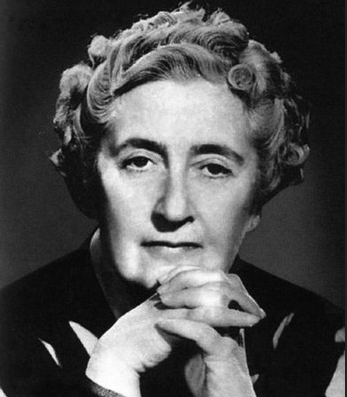
Writing a detective novel, is still big business and almost every weekly best seller list I see contains a mystery novel.  It is interesting to note that Mystery writing in English has also evolved in India over time. Byomkesh Bakshi, a Bengali detective was one of the popular detectives created in the 1930s. After several crime writers in regional languages, in English there are more Indian writers turning towards this genre and steering away from the chick-lit novels.  Amitav Ghosh’s  The Calcutta Chromosome and Vikram Chandra’s Sacred Games are significant leaps forward in the area of serious mystery literature.  I find it immensely hard to turn away from the genius of Christie or Doyle, but would welcome more such page turners in the Indian literary scene. 

I am walking off to sink my teeth into that nice juicy mystery novel! What mystery book do you want to pick up to read next?

Sunday, September 23, 2012

Book Review - The Krishna Key by Ashwin Sanghi


Five Thousand Years ago and Today. Ashwin Sanghi in his characteristic style weaves a story that blends mythology, fact and fiction. A huge amount of research is sprinkled liberally in the whole novel that adds to the story and sometimes confounds the reader.  After a chartbuster Chanakya’s Chant, Ashwin Sanghi writes on similar lines juxtaposing two parallel stories of a long bygone past of thousands of years ago and the present day.

The Story (or Stories I should say)
Two stories are included in this novel – The first one is the familiar story of Krishna as narrated by Krishna Himself. This story precedes the present day story in every chapter. The second story is set in the present day and revolves around a thrilling mystery unraveled by professor and historian Ravi Mohan Saini around the ‘Krishna Key’.

The second story that is new to us starts with a ruthless assassin murdering a scientist Varshney who was at that very moment engaged in deciphering a cryptic ancient seal with three ancient animal motifs.  Varshney’s old friend Saini unfortunately visits him before his murder and is accused of his murder. The story zips along with Saini fleeing from the police with his trusted accomplice and student, Priya in tow.

Saini discovers that the killer is after the four seals that Varshney had been killed for. Fortunately, three of the seals were entrusted to him and two others scientists. These four formed a set of four or the ‘Krishna Key’ that could lead to a priceless legacy left by Krishna.

The reader gets introduced to the killer who is a protégé of a mysterious ‘Mataji’. The killer has grown up believing himself to be Vishnu’s tenth avatar, the Kalki Avatar but commits the crimes unflinchingly as instructed by his ‘Mataji’. The competent police office Radhika Singh and her subordinate Rathore are hot on Saini’s trail as he tries to decipher the cryptic clues, prevent more murders from happening and identify Varshney’s killer.

The story flits across diverse locations of the desert in Kalibangan, under sea ruins of Dwarka, the icy peaks of the Himalayas, the milky white Taj Mahal and the lingam of Somnath. A trailer that is released on YouTube also highlights these locations.

My opinion
I enjoyed the book for the fast paced story and many of the facts drawn from Sanghi’s research.  His research explained that the mythical river Sarswati might have watered the Indus Valley Civilization, and that the Mahabharata really did happen. It was also revealed that the ancient city of Dwarka may have been built on reclaimed land and is now submerged under water.
  
However, the large amount of research that was presented in this book was its biggest failing. I grant that the author has been thorough in his research BUT, way too much of the research has been dumped on the unsuspecting reader.  It is almost as though he wanted to tell us everything that he had researched whether or not it had too much bearing to the story.  Some crisp editing might indeed have helped.

The other grouse I have is that I could not follow right to the end the supposed parallel between the two story lines. Unlike his previous work Chanakya’s Chant where the old and the new stories comingle with ease, I had to re-read the two stories but could still not make out the parallel tracks for many. If Sanghi wanted to narrate the story of Krishna, he might as well have written a separate book on it.  

Many had already called Ashwin Sanghi the Indian Dan Brown in this book, a comparison I tried hard to ignore. By and by, unfortunately, the similarities grew and the feeling of inspiration from the Da Vinci Code was unshakeable.  Although, as a Hindu mythology buff, reading a story in a more familiar context was enjoyable nevertheless.

My Verdict
With its fast pace, diverse locations, and ample thriller elements, this book is definitely written as a script for a movie. I would give it a 3.5 stars on 5. Read it, but be prepared to be confounded by a sea of research that might send you scurrying to Google to verify facts!

To check out the you-tube trailer of the book see - http://www.youtube.com/watch?v=Yyiz7okQx8I


This review is a part of the Book Reviews Program at BlogAdda.com. Participate now to get free books!

Wednesday, July 25, 2012

Announcing my new travel blog - The Roaming Diaries


Blah blah blah
‘What do you like to do when you are not at work?’ is a very common question that needs to be answered, while meeting new people, at social gatherings, and in introductions.  Usual answers that most people used have on resumes were ‘Reading’, ‘Listening to music’ and ‘TV’. When asked which books they like to read, most would get flummoxed and say ‘I have read a book by Sidney Sheldon in my life and have also read all my text books at school!  ‘Listening to music’ usually consisted of listening to the usual Bollywood fare served on TV and radio and TV, well, we are a generation of couch potatoes!

A lot has changed since then, with new hobbies of ‘photography’ and ‘social networking’ being added to the list. Not to disparage anyone who is truly passionate about what they do, but almost anybody who has a good looking DSLR, is a photography buff and ‘social networking’ usually consists of hours of prying on others’ lives on facebook!  ‘Watching TV’ and ‘Surfing the internet’ are strict no-no’s not being politically correct and unimpressive while ‘Reading’ is so passe’ unless one has attended the Jaipur lit fest atleast once!

I do believe everyone should try and find out what they truly enjoy doing.  In the hectic days of today, there is indeed ‘no time to stand and stare’atleast on weekdays, but one has to find something else to do to refresh those brain cells with non-humdrum work on the weekend.

Between trying to find out the hobbies I have beyond reading, (I really do love reading and can provide a list of the last 200 books I have read), and dabbling in a bit of everything – photography, surfing the net for blogs, and travelling apart from my usual job, I found my latest hobby to be ‘blogging’ about my travels. Although I started to record my journeys and tell my friends and families about the fabulous experiences I have had on the blogspot you are reading, a more travel focused blog was the next step I took.

The announcement
I have started a new travel blog ‘The Roaming Diaries’ (click to open) and read about my travels locally in Mumbai, India and abroad. I would love it if readers explored some of the wonderful places I have visited and I would be happy to answer any queries on locations I have visited.  Please delight me by visiting http://richaroams.com. Feedback would be welcome on this new venture.

I will continue to voice my views on Richland Talk on all matters apart from Travel and would love to see you on both my blogs!

Happy Roaming, reading and hobbying!

Thursday, June 28, 2012

City Streets


Am back to grumbling about one of my favorite cities. A poem I read by an old Indian poet, Santan Rodrigues, stayed impressed on my mind with everything it said several decades back in the early 70s. This urban poem still holds good today and even more so. Infact, had Mumbai been what it was in the 70s, I am sure it would have been the best city in India!
Just so I get a chance to read this poem anytime, here it is, on my blog, with all due credit to Santan Rodrigues.

City Streets

i’v e lived too long in your arms
to stand the stench
of gutters parading our promenades;
blaring horns –the music you play,
have now deafened my ears.
greasy seas you float in, have changed
their song, its waves the color
of their foam; and I stand
on a traffic isle death scared
of creeping cars. Why do your
unkept walls hang slogans.
your streets opening like mirrored
doors into streets, soon lose their way?
i am tired of those tall shadows
of skyscrapers, trodding my path
and the only greenery I see on your barren roads is dust.
why must my feet walk, where
people too busy to talk have
pawned their tongues? And the rude
nudging of the crowds remain
the only warm things I felt.
shucks I’m thro’ with you,
you rotten album of overcrowded
slums; and I am sick of
your tall-talk and
your canvassing smile to be enticed
to stay on
                like hell!
the city has lost its hold.

Sunday, May 13, 2012

The Devotion of Suspect X by Keigo Higashino


Crime Master Alfred Hitchcock once said - “I’m full of fears and I do my best to avoid difficulties and any kind of complications. I like everything around me to be clear as crystal and completely calm.”

The Devotion of Suspect X by Keigo Higashino resembles more of a clever Alfred Hitchcock plot rather than a gory Stieg Larsson escapade as says the cover page of this book.

The Plot
The plot is simple. Yasuko leads a simple life as a waitress in a little diner supporting her young daughter Misato as a single mother. One usual day of work, her alcoholic ex-husband Togashi makes an appearance toppling her world. As he harasses Yasuko and Misato with his demands for money, an aggrieved Misato attacks. In the ensuing scuffle, Togashi falls dead.  Next door, an infatuated genius mathematician Ishigami listens and understands. He calmly steps in to protect his lady love and support her to get away. He weaves a brilliant story and creates circumstances that baffle the detectives and clues that lead to nowhere.

Even though the reader knows the murderer and how it was done, it makes for a thrilling read as the police investigator Kusangi tries to unravel the web that Ishigami has woven.  Ishigami ensures that the prime suspect mother-daugher duo have irrefutable alibis, and has a chain of clues that lead to absolutely nowhere and far away from Yasuko and Misato. Even as he stakes all to win Yasuko’s heart, little does he know that there is already someone else in her life. To add to Ishigami’s anxiety, comes along an old friend, Yukawa, a brilliant physics professor who has studied in the past with Ishigami. As the usually reclusive Ishigami meets with his old friend, he realizes that Yukawa is an aide to the police investigating the case and to add to the irony of the situation; Yukawa seeks Ishigami’s help in investigating Yasuko!

The emotional turmoil that the characters go through is well-placed in this otherwise fast-paced plot. Thankfully it is not really sappy or too sentimental and one can almost picture the geeky Ishigami in love and seeking to protect his damsel in distress quietly and unobtrusively while hoping she accepts him.
Elements of a best seller are a good story that keeps the readers on tenterhooks, strong characters with well delineated emotions and crisp editing. The Devotion of Suspect X had all these factors in its favor and the very unexpected twist at the end ensured that the reader will not forget the story for a long while. However perhaps it is a little unbelievable that any person would do so much for his love, especially when it is not even reciprocated or even known.  But that apart, I think most of the story was very believable, and everything stacked up well with no loose ends.

The Verdict –For a story well told, with all elements of a commercial potboiler- drama, pretty woman, damned villain, mystery, and last but the best of all, an original twist in the tale I will give 4/5 stars.


This review is a part of the Book Reviews Program at BlogAdda.com. Participate now to get free books!

Friday, May 04, 2012

It's all in a Name!


Who is Stefani Joanne Angelina Germanotta?  Hint – She is one of the most celebrated rock stars today.  Well, for those who don’t know her yet, this lady chose to call herself differently and her name is yet another feather in her cap for being different.

Going on with my previous obsession on names (see previous blog here), I have developed a keen eye out for everything that is named and whether or not it makes sense. Names abound in a consumerist society that is now very socially active virtually. Gone are the days when one plainly asked for a product.  Each person, each product and everything that is marketed is now a brand.  Stefani Joanne Angelina Germanotta is a brand. She is a legend with more than 20 million followers and more fans than that.  She is better known as Lady Gaga. 

A few general observations on names that catch my fancy (or those that didn’t) - .

People
Can we then choose to call ourselves what we want to be known as? Can there be a world where our last names and our first names are changeable to whatever we choose them to be without the hassle and the extra work that goes into it?
All doting parents want the names of their babies to be different.  Gone are the days when the usual Rahuls, Nehas, Amits and Poojas ruled the roost. Now each name is increasingly complicated, myriad and has to have international connotations. Interpretations in different languages are sought and pronounce-ability in foreign languages tested.  As a result, again all the ‘uncommon’ names have become common! In my circle of people, there suddenly is a glut of Aryans, Aryas, Aaravs who are probably the next generations Amits!

Whatever the real identities of the people maybe, social media has changed the game. If Stefani Joanne Angelina Germanotta can call herself Lady Gaga, non-rockstars on twitter and blogger have changed their identities.  Many new age twitter celebrities are known solely by their chosen names. From an Outlook cover story on the new age celebrities, the ones who are featured are a Gabbar Singh, Bollywood Gandu, Great Bong, Jay Hind, Satan Bhagat, Rofl Indian and Dr Yum Yum Singh.  Who cares what their real names are.  One of my favorite bloggers is known as Cyber Nag or Zephyr Nag (visit her blog here) as she chooses to call herself. Her real name remains a mystery to most. I can’t call her anything else but Zephyr Aunty and don’t even want to know what her real name is!  More famous by their chosen names, these individuals have created their own brands and have huge fan followings.I almost think it's time to rechristen myself now!

Housing Projects
Enroute Pune on the expressway, as one nears Pune, a host of hoardings spring up on the latest best residential projects. All of them make you dream of living that foreign dream. Almost. With names like Wisteriaaa (do they think they are building a Desperate housewives set really), Pallazio, Rivieraa, Manhattan,  Liviano, Ariana, Kyra, Silver Leaf and Aria,  Pune is the new Rome or Greece or New York!  As images of Italian restaurants are conjured up, it is dismaying to enter the chaos of the typical Indian city and see that all these buildings that are supposed to be surrounded by lush green fields and resort like locales in the advertisements are in reality in concrete jungles surrounded by more buildings and once the paint starts pealing, the Ariana will be more of OhDearana!

Phones and tablets
With increasing number of mobile phone models, automobile models and new products being launched, I say it isn’t easy to boil down on that one name that has already not being taken which would resonate well with the target audience. Consider the ‘iPad’ for one. Apple has it simple now.  Anything with the ‘i’ attached to it is mostly a hallowed Apple product and sells.  The next in the series are simple 1, 2 or 3 and so on.  So we have had the ipad1, ipad2, ipad3, iphone1..iphone4 now iphone 4S.

Other companies though have had to be more imaginative with a massive range of phones in all possible sizes, configurations and features. Samsung has its ‘Galaxy’ of phones with really weird and impossible to remember suffixes of I9070, Y Duos, Pro Duos, I9100 etc. Nokia has its Lumias suffixed with the again immensely forgettable 610, 710, 810 etc. All other companies have a range of names such as Explorer, Sensation, Rhyme (HTC), Bold, Curve, Torch (Blackberry).

Automobiles
I have always enjoyed knowing the names of new launches. Bikes are exciting in their nomenclature. Discover, Pulsar, Eliminator, Avenger, Sprint from the Bajaj stable certainly try and bring in that adrenaline rush as it tries to outdo Hero Honda. Hero Honda has an elegant Splendor, Karizma, Passion, CBZ Xtreme, Achiever and Glamor in its repertoire that talks of looks, style and the passion to ride.

Cars aren’t left behind in the naming race either. Maruti scored with its apt ‘Swift’ with is sleek and sporty looks.  Chevrolet has a Spark and a Beat that are certainly uplifting names to own.  I don’t know how Hyundai got away with i10 and i20 even though they are not Apple products! Honda with its City has garnered plenty of urban users with its urban name.  Nissan Sunny certainly has a sunny feeling to it while Skoda with its Superb can make its owner proud.

Each brand has certainly tried to bring about speed, style or have a bright name to jazz up your mood!

Item songs!
The next hottest sought after names are in Bollywood ruled by Chikni Chamelis, Badnaam Munnis, Jawaan Shielas, Discoing Anarkalis, Silk Smithas, Dhannos and Chammos!. I wonder what is next- Rapchik Reshma, Nylon Nalini and did someone just say Cotton Kamini?!

What are some of the exciting names you have come across or thought of?

Monday, April 23, 2012

Book Review: The Lost Story by Amit Goyal and Sudhanshu Gupta


When I received this book from a budding Indian author, another MBA at that, I was skeptical and had almost labeled it a la Chetan Bhagatesque book packaged differently. However, I was in for a pleasant surprise when I found this collection of short stories bound in a longer story quite well written, entertaining and with a great recall value.

The Plot
The story begins as a budding author Sandy gets an offer from his favorite and revered booker-winning author Saleem to write a short-story book with him. One starts the story and the other finishes it in his own distinctive style. Likewise, two separate people have written the book.  As the stories unfold, Sandy tries to understand Saleem’s past and the secret behind a locked room in his house.

The Stories
The stories were an eclectic mix of a sinister ghost story, a gay super hero to an office romance. I particularly liked the story of the ill omened brothers named as Rahu and Ketu, the ordinary guy who did not fight the terrorist but had to live up to being a hero and the touching story of the Old Man who everyone ignored in the cafe. The book could probably have done without the romantic stories which did sound, forgive the term, more MBAesque and less Booker-writeresque as had been delineated. The end of the book was rather esoteric and I had to reread it to truly understand what the author wanted to convey. But then again, the end fitted well into the scheme of things.

Writing Style
Considering the fact that two different authors had written each of the stories, I was not really able to distinguish two separate styles, which would have been a major concern in maintaining the continuity in the book. The language used was descriptive, and visually stimulating. Fortunately, the parlance did not venture into the territory of mixing in Hindi as is the current trend or and the use of invectives was controlled much to my relief.

The Verdict
I will go with 4 stars for this book for originality and interesting stories. 

Monday, April 02, 2012

Ground Reality

Sachin Ramesh Tendulkar has scored a hundred tons. This prodigy is much hailed and not without reason. He attributes much of his success to his coach of his initial years Ramakant Achrekar who groomed him on the famous Shivaji Park.  But I am not going to write more on this brilliant man. Enough experts have already done that. 

Shivaji park, the now hallowed park held sacred by Sachin-worshippers is a lovely chunk of open space in Dadar West where kids can still play cricket and aspire to be another Sachin Tendulkar. It is a space where kids learn gymnastics, get coached in cricket, football, athletics and a haven for the health conscious to jog and an open place for adults, senior citizens and kids to hang out.

Shivaji Park Ground - Picture from Wikipedia

In a city of more than 20 million people, I wonder why it is that there is just one ground that is famous for producing prodigies?  A Sachin-worshipper might argue a player like Sachin comes only once in a century, but a person with even half of Sachin’s talent (50 centuries in a lifetime) is awesomely creditable too and the way Indian cricket team is playing, it wouldn’t mind that either! I find the answer almost too easily. It is because there are so few grounds where sports can actually be played and conditions are conducive to learning.

I stay in one of the central suburbs in Mumbai – Chembur.   There is a ground/ Maidan known as Gandhi Maidan close to my house where kids still manage to learn basketball, volleyball and skating at the YMCA. There are several teams playing cricket on one side of the ground and football on the other side. A fairly good walking track also exists on the periphery of the ground.  Being a less of a gym-person, when I shifted to this area, I was thrilled initially to find such a lovely ground nearby. Alas!, my happiness was short lived when the ground reality hit me. It is ironic that the very ground that I visited for health conscious reasons was a huge health hazard for all the adults and kids who came there for lack of options for miles around.

The ground ensures that my olfactory and visual senses are subjected to the maximum torture there can be.  All four corners are used as urinals for loiterers and disgusting men. Along all sides of the ground sit groups of men of various ages- teenagers and old men who believe that this play ground is a smoking lounge for cigarettes (and other things) and for ogling at women who walk on the track.  It is so sad to see young boys in their teens wasting their lives puffing away when they should be either studying or playing actively on the ground.  Even sadder is that these kids with jelled hair and fancy hairdos think smoking is very cool. On another side of this ground sit ominous men drink away merrily and gamble with playing cards. A dead rat or pigeon lies on the third side while garbage burns on the fourth side.   On the outside of the fenced ground at its periphery, stand a few men outside their BMWs puffing away and sipping alcohol in soft drink bottles.  

If my olfactory nerves and lungs can withstand all this, then my eyes are treated to visual pollution of litter all over the ground. Littered newspapers, plates, glasses, alcohol bottles, empty cigarette packets, plastic bags are callously dumped everywhere even though there are dustbins at a few designated spots.  Random graffiti paints the unpainted walls on one side.

On requesting the smoking sociopaths to move somewhere else and smoke has resulted in fights and abuses hurled at the women who pleaded with them.  As a woman, I would not even feel safe if it were not for the fact that I walk with a pack between such filth and malignant men. The YMCA and the ground authorities refused to help when concerned parents raised these issues.  The lone watchman and caretaker of the ground fled since he could not alone counter the many iniquitous activities the ground was used for. A lone rag picker is the only one who does any good when he picks up what is of use to him.

When builders are not gobbling up our open spaces and politicians are not using it for their political rallies, it is the citizens of this very country who pretend to be educated who are making these playgrounds unusable.  If smoking in public areas is an offence why indeed is it so difficult to have any action taken against these miscreants?  Why do most people still believe everywhere outside the realms of their house is a dustbin? Quite honestly, citizens are scared to be the ones to report these nefarious activities and I don’t blame them. For who would want to take the brunt of complaining and the backlash?  Policemen have far too many things on their mind, and are indifferent.  Elections are over now, and there is little hope that the local politicians are likely to do anything to better things anymore.

I wish I could change so many things around here on this ground and the other open spaces in our city which I trust are no different unless they are in the poshest of places in town with a fair amount of security.  First and foremost, I heartily wish I could smack the smoking rascals right out of the vicinity of the ground out of sight of the impressionable kids so everyone can breathe normally. Those urinating and littering should be reprimanded and penalized heavily.  I wish I could walk where no men ogled and where I felt secure.

A few lights more on the ground would go miles in helping women feel more secure. A well maintained kids area will encourage more parents to use it. A patrolling policeman in the evenings would ward off miscreants. Perhaps privatization/private management of our grounds is the key. Even if they charge a few rupees to go on the ground, a huge chunk of the anti-social elements would disappear. After all probably they can use the entry fees for just one more cigarette.  For those who really want to play could take an annual pass which is not prohibitively expensive.

I hope parents take up notice and check if their teenage kids were smoking or doping and advise them against it. I wish some officials took up notice and stopped the blatant misuse of the few remaining grounds we have, and people stopped littering and learnt to respect the space that belongs to all.  Change from authorities and people is the need of the hour! Only then, will we have more Sachin Tendulkars in this country full of aspiring and passionate cricketers.

I would love to hear suggestions from you – the Gandhian way, to change things and hope to do continue and try and change things for the better. 

Wednesday, March 21, 2012

Stop being a Road Terrorist

I am not a video game buff. But there is one game that I play every day. This game has innumerable challenges, obstacles, and a clock that keeps ticking before I reach my destination. The rules are puzzling because only I seem to follow them. Yes.  I drive a car in the Mad Mumbai traffic. All that this game says is players should be cognizant of the 3Ps (Potholes, Pedestrians, Pandus) and 3Bs (Bikers, Buses and Blaring horns). A word of caution - Understanding the 3Ps and Bs will make you adept at driving, but do not venture out without a health and life insurance since the Road Terrorists are out to get you!


1.       Potholes – ‘Road me gadda ya gadde me road, tu tension mat le, jaane de chod’ goes a guy on the radio as I rollercoaster my way up a hill where there is a pothole even on a speed breaker while going uphill. Why do they even take the trouble of building speedbreakers in India I wonder?   I tried complaining through various mediums, but everyone says the road doesn’t fall under their purview.
Politicians/Corporators with your tall manifestos – Either give us better healthcare facilities to cure breaking backs or repair those roads completely instead of ignoring or dumping on the road a thin superficial layer that only makes the road even more uneven than ever before!

2.       Pedestrians – The responsibility of ensuring road safety apparently lies solely with the motorists in India. In a country where motorists do not respect pedestrians, why should pedestrians respect motorists? If motorists do not stop at red signals for them to let them cross, of course, they will exact their revenge by starting to walk when it’s your green signal. Well actually, when pedestrians start crossing, it is a sign that the signal is green!  Pedestrians also usually walk in the middle of the road with earphones or mobiles in their ears and do not give a damn as your brakes squeal behind them after honking. Pedestrians are also so used to encroached footpaths that when presented with an un-encroached footpath, they shy away from it fearing it is cursed to walk on it and spill out on the road. 
Guys in your two and four wheelers - it is a good idea to let these poor guys cross the road when the signal is red. YOU BLIND MEN, please wait behind a certain real or imaginary white line that gives space and lets people cross safely at your red signal! And footpaths if not encroached are not for bikers to ride. On their part, Pedestrians will then cooperate by not jaywalking in the middle of the roads.

Encroached footpaths and people crossing over dividers

3.       Pandus or Police – They are the important guys of the road who everyone fears usually found near red signals. If there is a pandu as they are fondly called in Mumbai, then people wait at signals, and break fewer rules. These guys are usually a harried lot, standing in the scorching sun and pollution for long hours, haggling with errant drivers for petty bribes, turning a blind eye to BEST buses breaking rules or bikers who they know they cannot catch. I don’t really know whether to appreciate the hard work for their low pay or to blame them for what is happening on the streets of Mumbai.
I wish, they invoked enough fear in motorists to believe no bribe would work to enable them to get away and that errant drivers would be caught, reprimanded and penalized very heavily. It is also time we stopped taking these guys for granted and believing that we can get away by paying petty bribes.

4.       Bikers – A large chunk of this species believe they are as tiny as ants and can wiggle their way through any amount of traffic, climb on any footpath, have the right of way on both sides of the road, break major and minor signals at breakneck speed or block roads at signals in their egoistic fight to be at the very front of the line.
I ask, can’t these annoying errant bikers exhibit a mite of patience to stop clambering over pedestrians on footpaths and taking every plausible road on the wrong side if there is no pandu to catch them? 

Chaos!
5.       Blaring horns - ‘Honking is my birthright and I will honk it. Pippepiipii.’ This seems to be the motto of every motorist in India. As though honking makes traffic move. As though, signals turn green by honking, as though pedestrians pay any attention to it.  Everyone is in a tearing hurry to reach their destination. I don’t get how honking speeds things up!
Although extensive campaigns by traffic police can be seen at major junctions, why is the plea to stay calm so ignored? I cannot help but curse all the incessant honkers and hope they all go deaf one day. Can the government really not clamp down on the car and bike companies who provide such horns in the vehicle and make it prohibitively expensive to buy them from independent shops?  For drivers in AC cars, just because you cannot hear the honk loudly enough, does not mean that, it gives you a right to blow others’ ears off! I wish there were a reverse horn invented for cars and fixed mandatorily that would sound twice as loud inside when honked on the outside!

6.       Buses - Stay away from these unfriendly elements as far as possible. BEST Drivers are not only rash but they are also bullies. They will crush you unmindfully in their quest to get ahead of you or because they don’t like you. Buses will drive only in the middle of the road so you cannot overtake them. Keep a safe distance from them, as they screech to a stop right in the middle of the road to pick up passengers from the bus stop at the extreme left. If the bus stop is really far left, then beware of them swerving frequently to and from the rightmost lane and the leftmost lanes. The bus drivers derecognize Yellow and Red as colors and see only Green. These guys have no qualms, can rarely be apprehended and little that you can argue. They also honk incessantly. Stay Away from them.
What can be changed, is some training to these drivers and higher penalties/increased suspensions to stop them from flouting rules the way they do. I wonder if we citizens can call for a motion against them for irrational driving.

Well, there are a whole lot of other factors one needs to be mindful of, but this blog would be too long then. Big vehicles, Zigzagging autorickshaws, the stray kids who run amuck on the streets, dogs who refuse to move from the middle of the road till you are almost over them, mobile phone gabbers, preening women drivers and roadside squatters and peddlers. Red Lights did you ask? Well, those we see, but have never been mindful of them except when the Pandu is around. no? .  Oprah Winfrey on her visit to India, asked if Red Lights were for fun on Indian roads. Since we all value foreigners’ opinions so much, perhaps it is time to pay heed and see some wisdom in her words instead of only raving about her sari. When we finally do, that’s when I will include the Rs – Red Signals, Right Lanes and Road Sense in here.
Amber is the new Green!
The latest world-wide statistics released by International Road Federation (IRF) reveal that 1,19,860 people are killed in road accidents every year in India as reported by the Economic Times. DNA reports that the number of accidents in Mumbai is 23,440 in 2010 with 560 deaths. This is far higher than any terror attack we have had. I welcome any bill that brings on enhanced fines, stringent punishments and lesser tolerance of repeat offenders.  Till such a bill is passed, we need to bring about discipline. All that needs to be done is to be patient, stop trying to outrace others and respect the milling crowds and fellow motorists around. Stop being a road terrorist. Go on, follow rules, be the change and lead by example for safer roads.

If you are on Indiblogger and if you like my post, I will  be honored and delighted if you promote it here.